
Too Deep or Too Shallow!
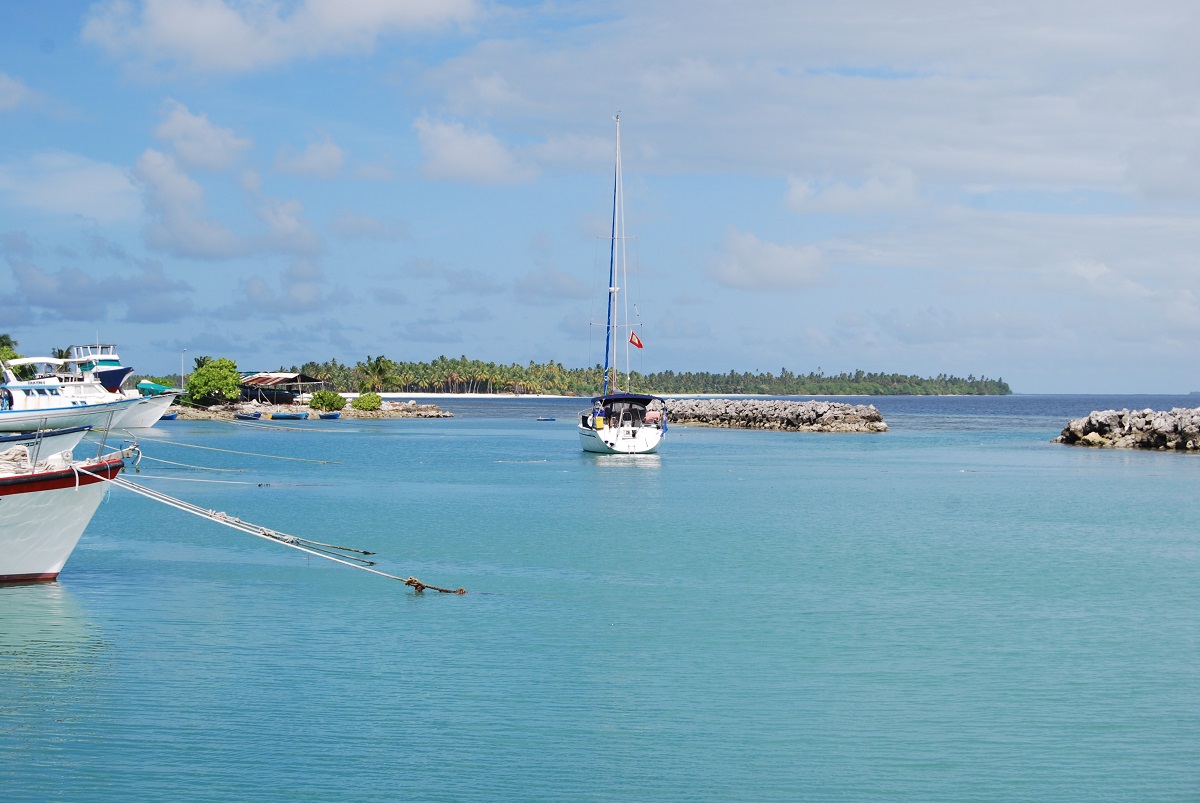
Lisa and Dave had recommended a couple of anchorages within the southern Huvadhoo Atoll but found the two we tried were too shallow where the coral reef was or too deep outside the reef. The end result was to enter the small fishing harbour at Gadhdhoo after spending nearly five hours trying to find a suitable anchorage in the lagoon. We concluded that Lisa and Dave rely quite heavily on their Maldivian crew to do the ‘parking’ of their dive boat!
Our experience at Foamullah prepared us a little for the long lines that criss-cross the harbours set out by the often large supply and fishing boats although we were still not fully prepared for the crochet work that had been created across the small Gadhdhoo harbour. We bit the bullet and set anchor just inside the entrance in the only free patch of line free water we could find. My nerves have been on edge ever since as boats play dodgeball with us as they squeeze in and out of the harbour. Fair play – we’ll admit that we are in the way, but the driving of these guys is exceptional. We have worked out that the lines are used to hold them off the harbour wall, but also to help extricate themselves from the tight spots that they manoeuvre into. We are all aching for a swim in crystal clear lagoon waters after the overnight passage and the previous two days stay in the harbour at Foamullah, but it looks like it is not to be, at least not for today. It seems to be refuelling day. A tiny ‘oil tanker’ about forty feet long is making a relay of runs from a medium-sized tanker anchored outside the harbour. They are on their third round trip since we arrived – it takes about an hour to fill the fuel supply boat and god knows how many more trips to fill the tanker outside the harbour with diesel. The whole time this is accompanied by the bang! bang! bang! of a large diesel pump – ahh, the peace and tranquillity of the Maldives.
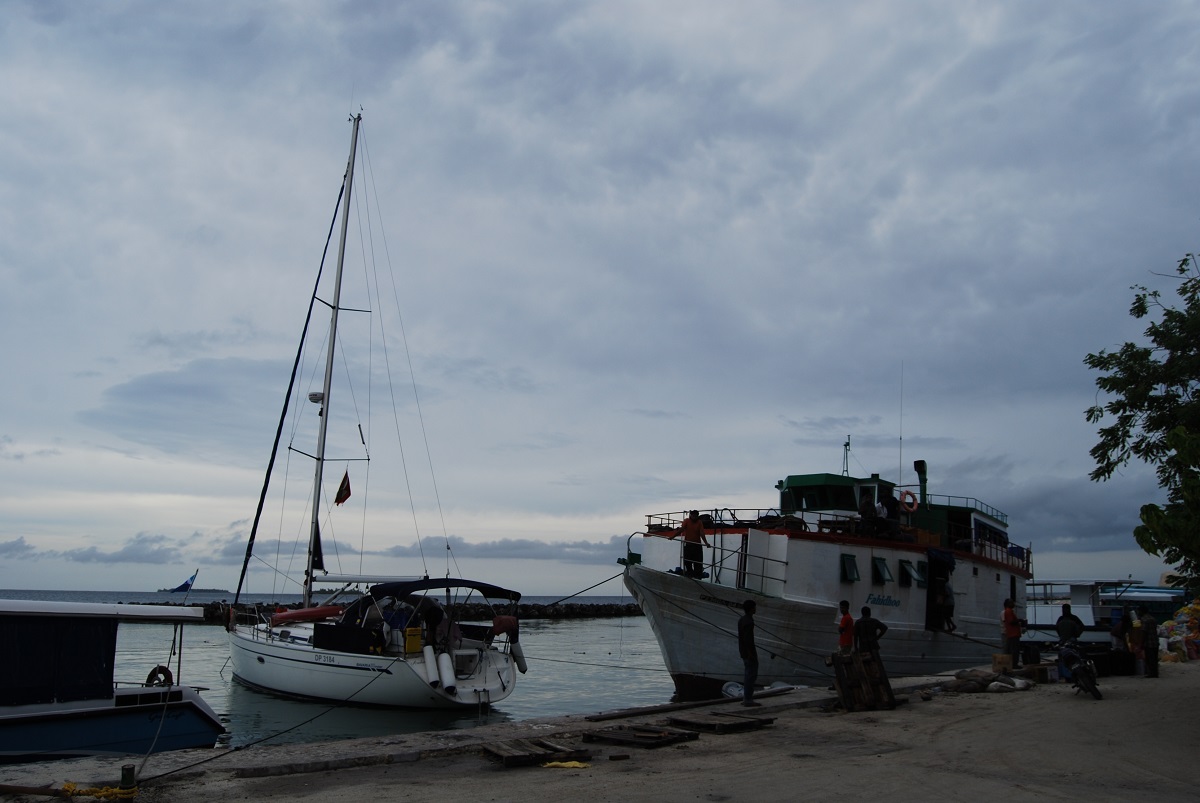
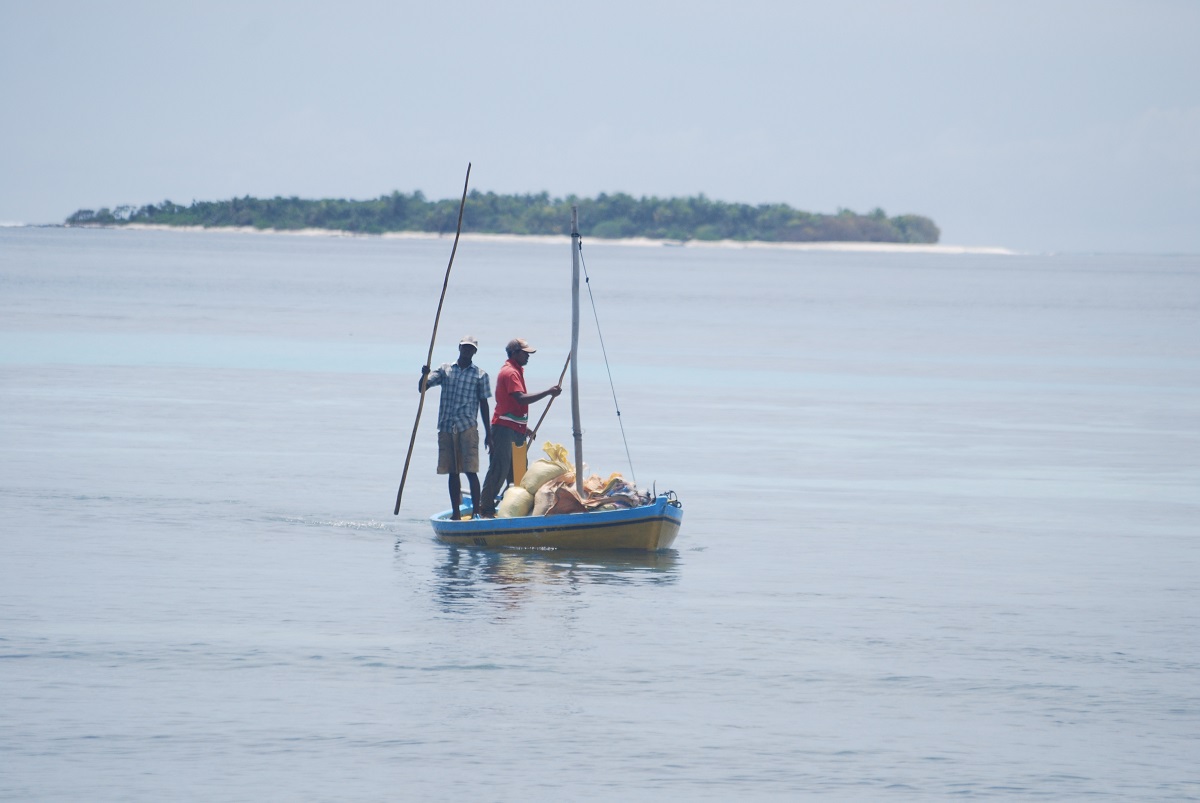
We have just witnessed what may be the filming of the local Laurel and Hardy show, where the local supply boat was exiting the harbour and caught one of the crochet work lines which happened to have strayed across the harbour. These supply boats are built like floating flat-sided boxes giving them plenty of windage. I’m guessing they’re also very underpowered, with a single propeller giving limited close-quarter manoeuvrability. As a breeze on the beam threatened to carry it sideways into the harbour breakwater, out went a further myriad of lines to connect onto the floating spider web. Shouts of advice reverberated around the harbour and the ropes were cut free. The two hapless rope-cutters in snorkelling gear are dragged out of the harbour on the recently released lines while the supply boat went full throttle to get out without drifting sideways into the harbour wall. “Cut! Filming finished for the day!”
Given the present circumstances, we may well stay just a day here before heading further north. Given our day-long fruitless search for a decent natural anchorage when we arrived in this atoll, we are already realising that good natural anchorages are going to be few and far between. But fingers crossed…. at least for now we are not short on entertainment.
05 August 2009
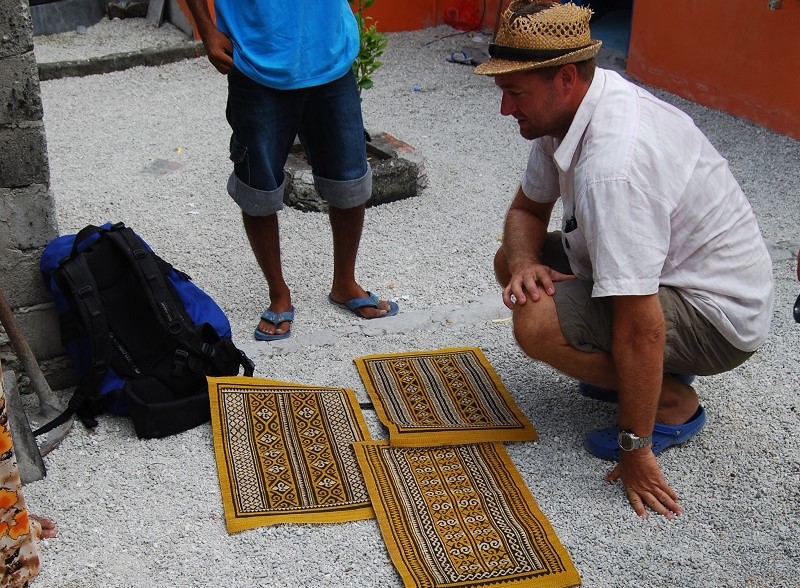
It was great to catch up on some sleep last night and we all felt fairly refreshed this morning and were ready to start exploring Gadhdhoo. The population is quoted in the Lonely Planet as 2,600, so we expected a reasonable size village, but Gadhdhoo is actually surprisingly small. We had pretty much covered the island in under two hours. Not really anything too different or exciting in comparison to what we have seen on other atoll islands. Lonely Planet had mentioned that the island is famed for the woven mats made from reeds on the neighbouring uninhabited island of Gan (not to be confused with Gan in Addu Atoll). Despite our best efforts, we spotted nothing that indicated the presence of these mats. We headed back to the harbour and Bryan struck up a conversation with some of the locals to get directions and within a few minutes, we were following one young guy to find one of the local women that weave them.
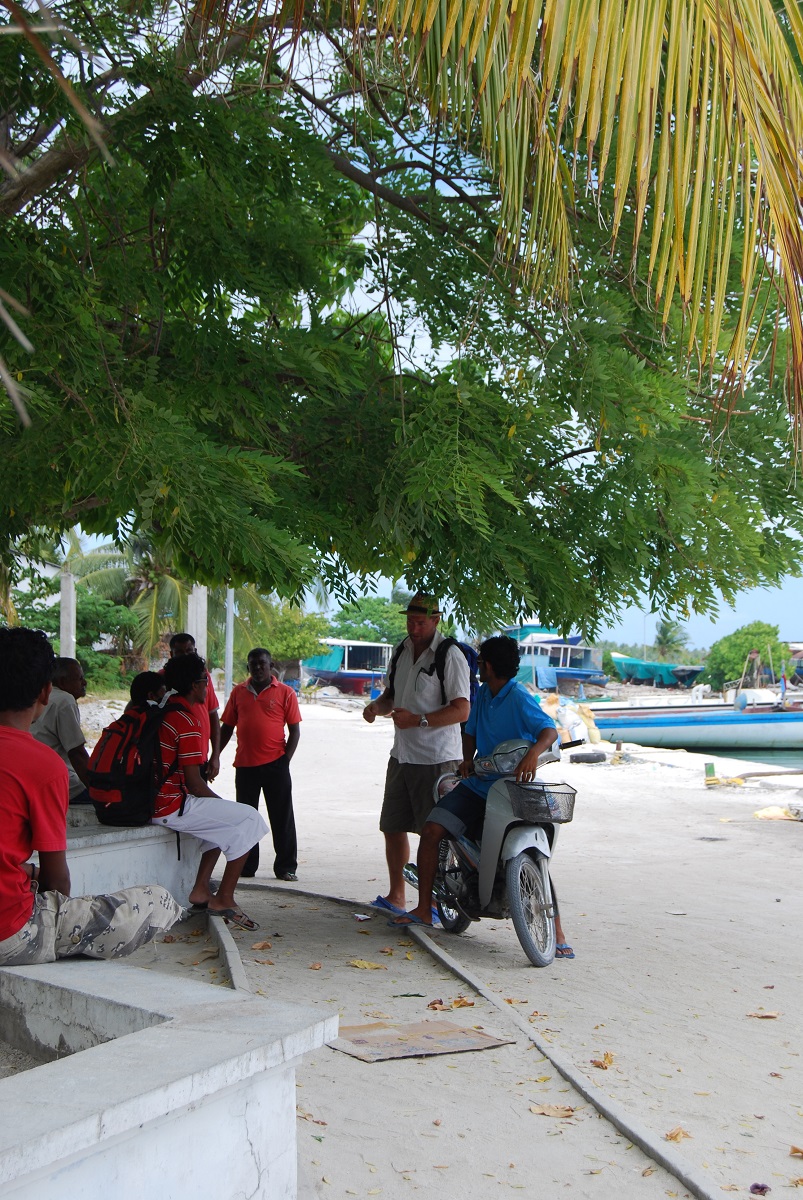
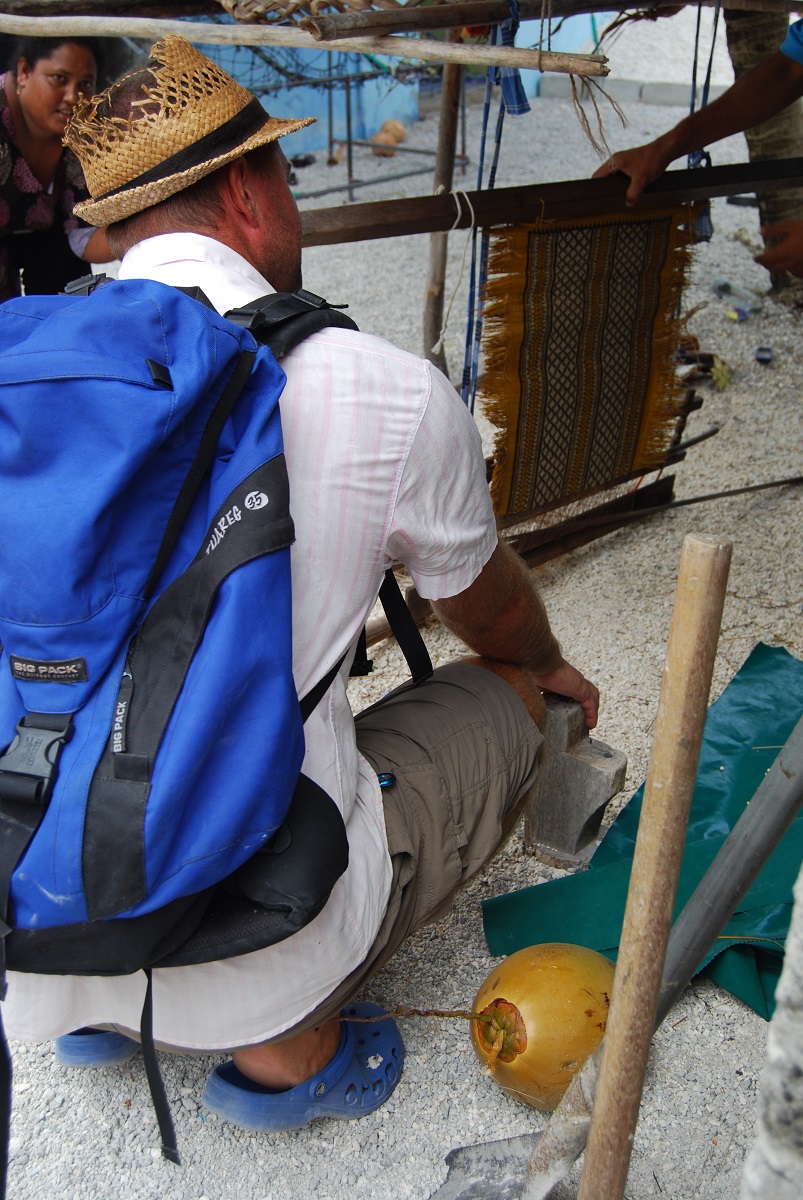
Our young computer studies student guide took us on quite a goose chase as he went from one small hut to another trying to find an example to satisfy our curiosity and after a few changes in direction ended up at a local woman’s house and she showed us the loom on which she works, which contained a half-finished one. It appears that this is a true cottage industry with many women of the village making the small mats in their spare time. The mats are woven from very thin grass-like reeds and are coloured black or yellow or left in the traditional wheat colour. The table mat size mats take about two weeks to produce. We asked to see any that she had for sale and soon made a purchase of what will be one of our unique reminders of Maldives.
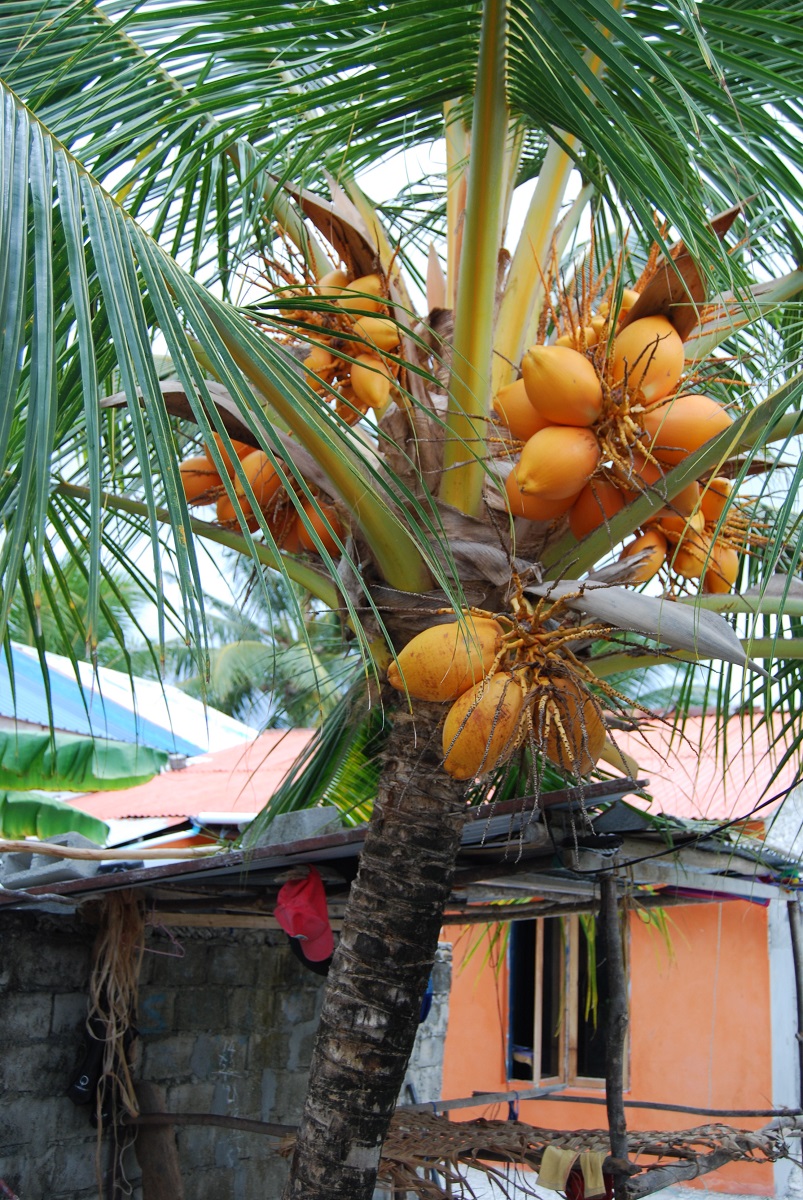
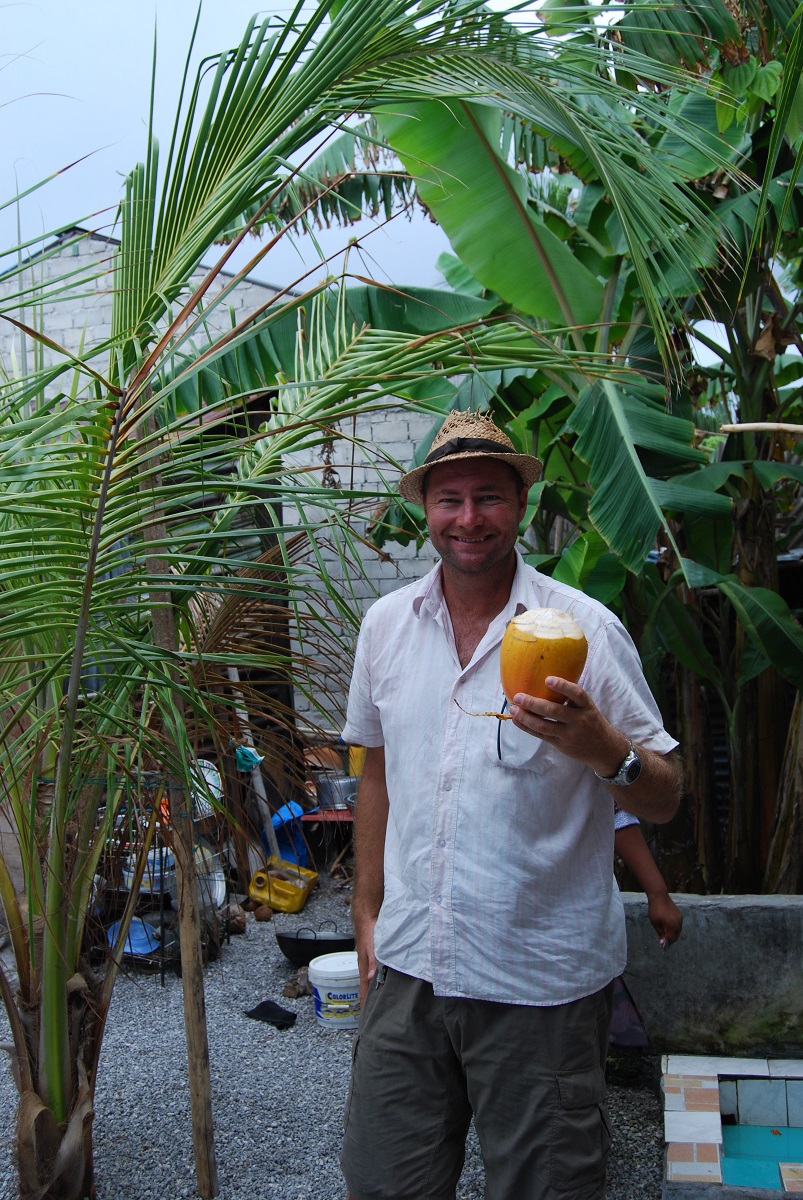
Just as we were leaving we were offered some coconuts from the tree inside the yard. These coconuts are unlike the ones we were accustomed to in Chagos. The ones here are much yellower in colour and the milk was very sweet and delicious. Once we had drunk the milk, the husks were then hacked open and the soft white flesh was quickly consumed. Our student guide seemed keen to leave by this point. I guess we were looking a bit too settled. It was just as well we set off when we did as within the few minutes that it took us to get back to the harbour, a big rain squall began to blow in and Aroha had swung 180 degrees and was consuming rather more of the small harbour than was safe or wise. As we got back to the boat, the heavens opened and within an hour we had caught enough water to fill our completely empty forward tank. Showers again, yippee! We then took advantage of the new position the boat was now sitting in and took some lines ashore to tie to the quayside and hold us in a more predictable position. Bryan seemed to gain some kudos from the locals in the process of doing this – not only for diving into the harbour water, which seemed to impress them, but also for securing the new ropes. He noticed that they were even inspecting his knots and muttering in approval at his bowlines.
The wind has settled again now, but even if it blows up again we are not going to move too far. The only disadvantage is that the stern of the boat now faces directly onto the harbour wall, which seems to have a constant gathering of locals keen to see as much of us and the boat as possible. We must be better viewing than the local TV channel!
Follow and like us to be notified of future blogs!


