Holy Smoked Tuna!
The planned early departure from Gadhdhoo Harbour nearly went belly up when we awoke to find what we thought should be mid-tide was actually low tide. One of the downsides of sailing in the Maldives we have discovered is the lack of tide tables and reliable charted depth data. As we were weighing our options (instead of the anchor) to wait for high tide or check the depths ourselves to make sure we could make it safely out of the harbour without grounding, we decided to opt for the latter and set out in the dinghy with our own lead weight (dinghy anchor on length of rope) and circled the harbour entrance taking spot depths. We reckoned we should have at least three metres so decided to set off for our next destination- approximately 25 NM to Vilingili in the northeast of the Huvadhoo Atoll.
The passage was smooth and uneventful and we arrived at Vilingili around lunchtime, again heading into the harbour. Vilingili harbour is much bigger than Gadhdhoo so anchoring was much easier although the harbour itself did seem quite busy with fishing boats moving in and out. Within an hour of us arriving one of the larger boats was on the way out and we found we had dropped our anchor on top of one of their lines. As we raised the anchor to release their rope we decided to go to stern to the harbour wall as we did in Gandhdhoo. Unfortunately, we timed this just as a rain squall blew in bringing with it stronger winds and a change of wind direction. Not good!! We ended up getting a considerable amount of help from the local fisherman, including a couple who came on board to help us take up a mooring line rather than re-anchoring since we were getting blown around and getting much too close to comfort to some of the other boats in the harbour. We licked our wounds and learnt some lessons which seemed by then quite obvious in retrospect – have the fenders out and lines ready whenever entering a harbour, even when not planning on using them.
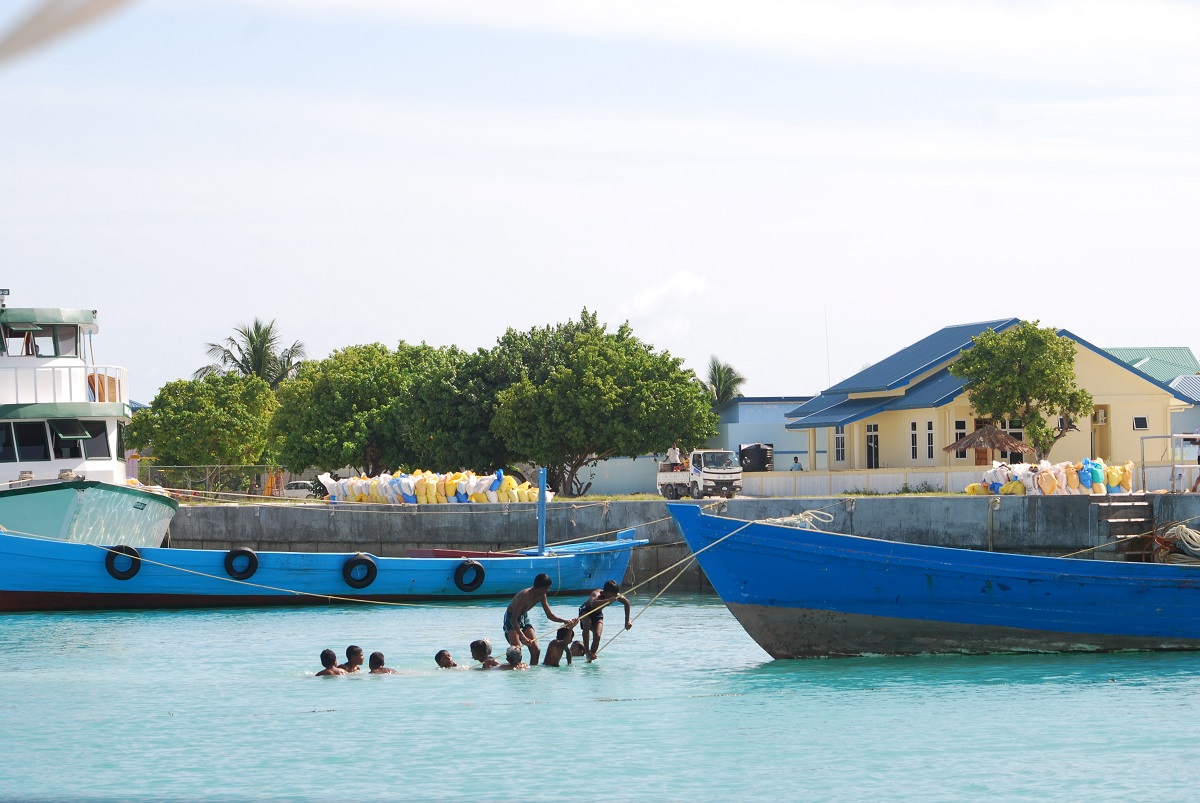
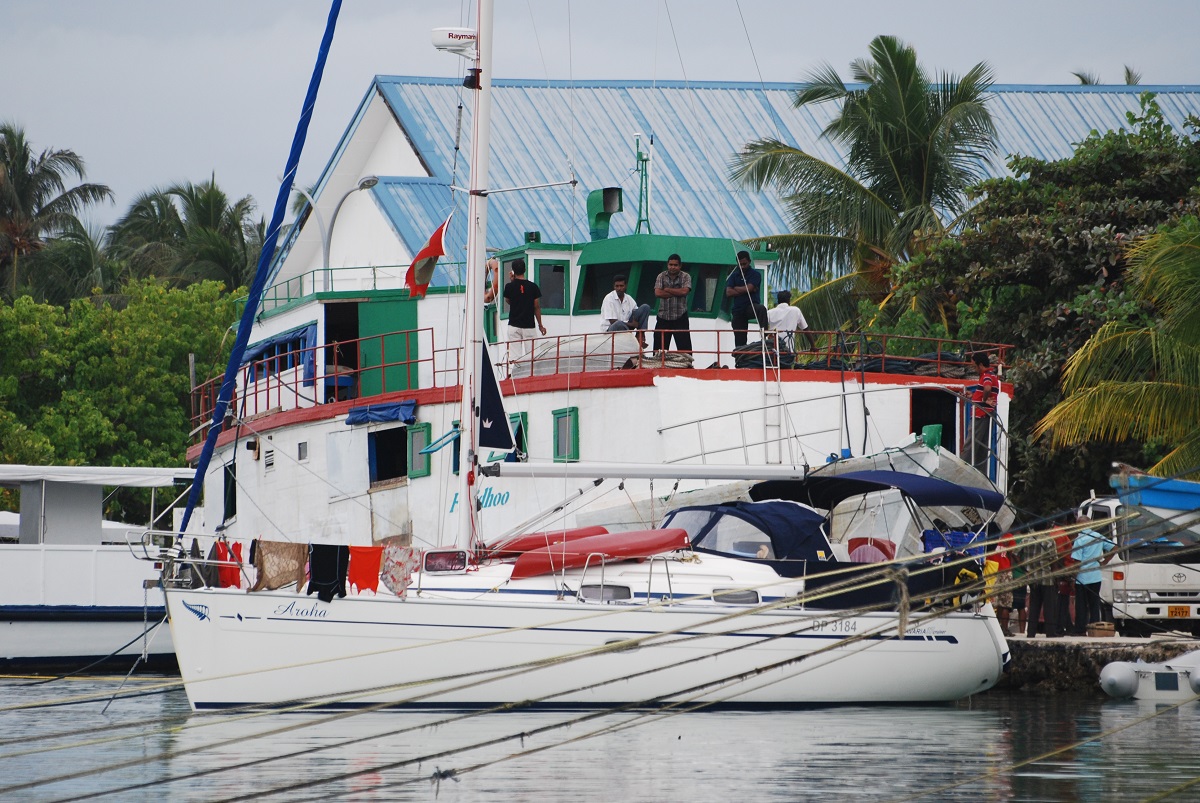
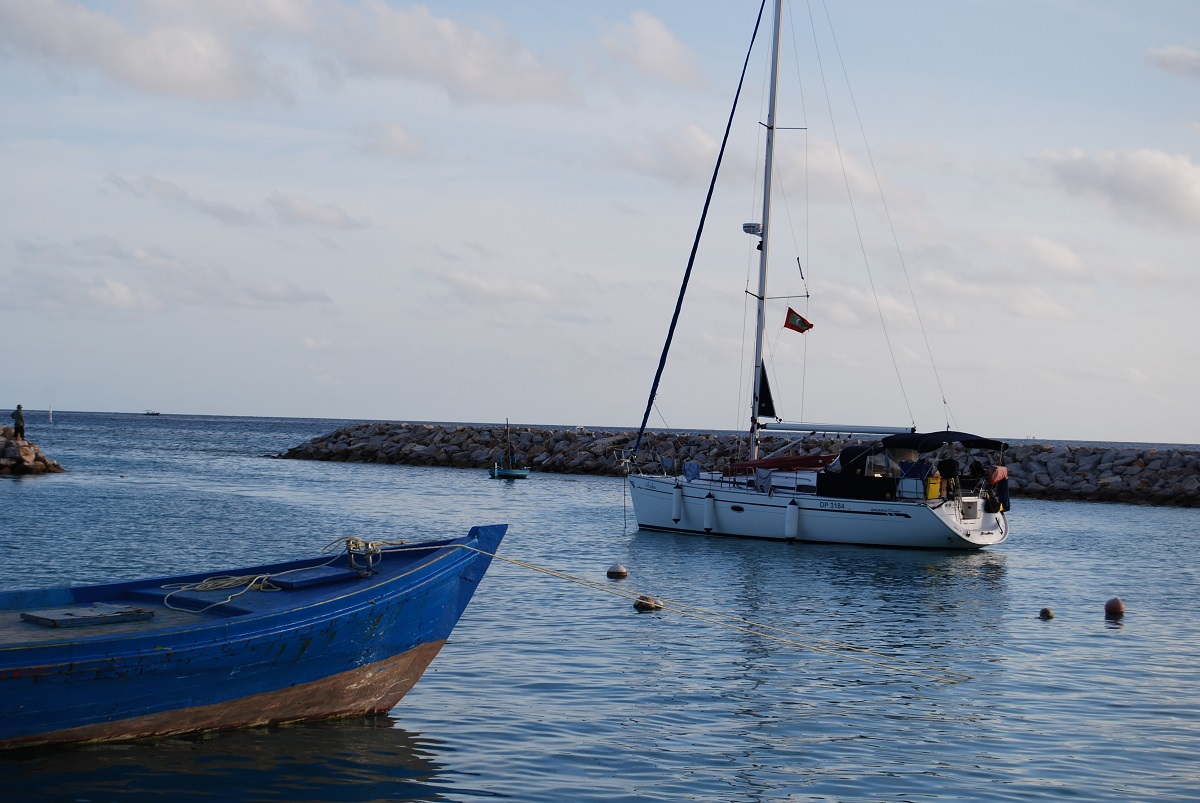
After what seemed like an eternity we ended up stern to the harbour wall, well secured and two lines off the front – just as the heavens opened and soaked us to the skin. Sighs of relief all round- and settled in for the night. Or so we thought… around 4 pm the islands customs officials paid us a visit. Bryan had gone ashore with our papers to prove we had our inter-atoll cruising permit, with me watching from the boat. Next thing I see is Bryan getting on the back of one of the customs guys motorbike and him being taken off somewhere. Uh oh!! Maybe he was being taken to the cells! He came back some thirty minutes later and it turned out that we were in the spot of a local dhoni (passenger boat) and would have to move as it was due in shortly. He had gone with the customs guy to see the ‘new’ harbour just five minutes from where we were and had been told we had permission to anchor and would be ‘safer’ for us. He also claimed it had eight metres depth, which we found hard to believe. With less than an hour to nightfall, we set off again. The new harbour had just over three metres depth (fine with us because it means a smaller swinging circle at anchor) and looked far more sheltered. We set the anchor again and breathed yet another sigh of relief that we had made it before the sun went down.
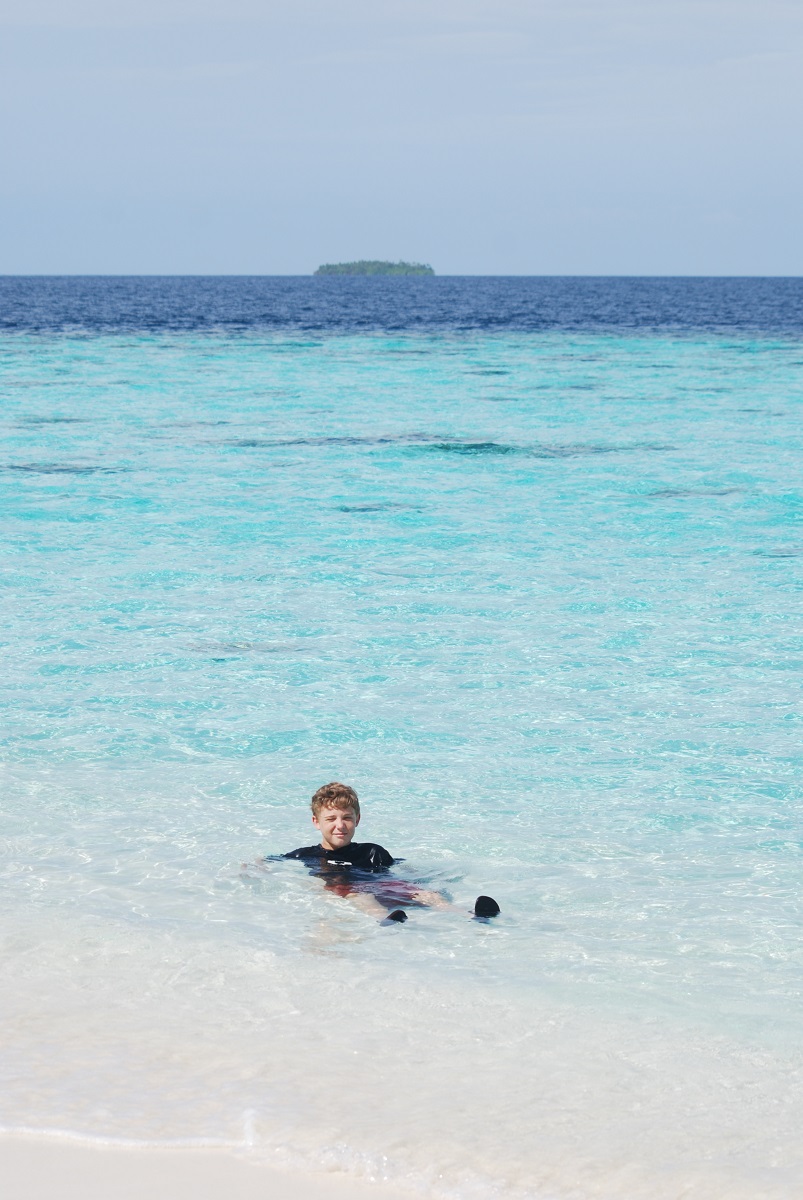
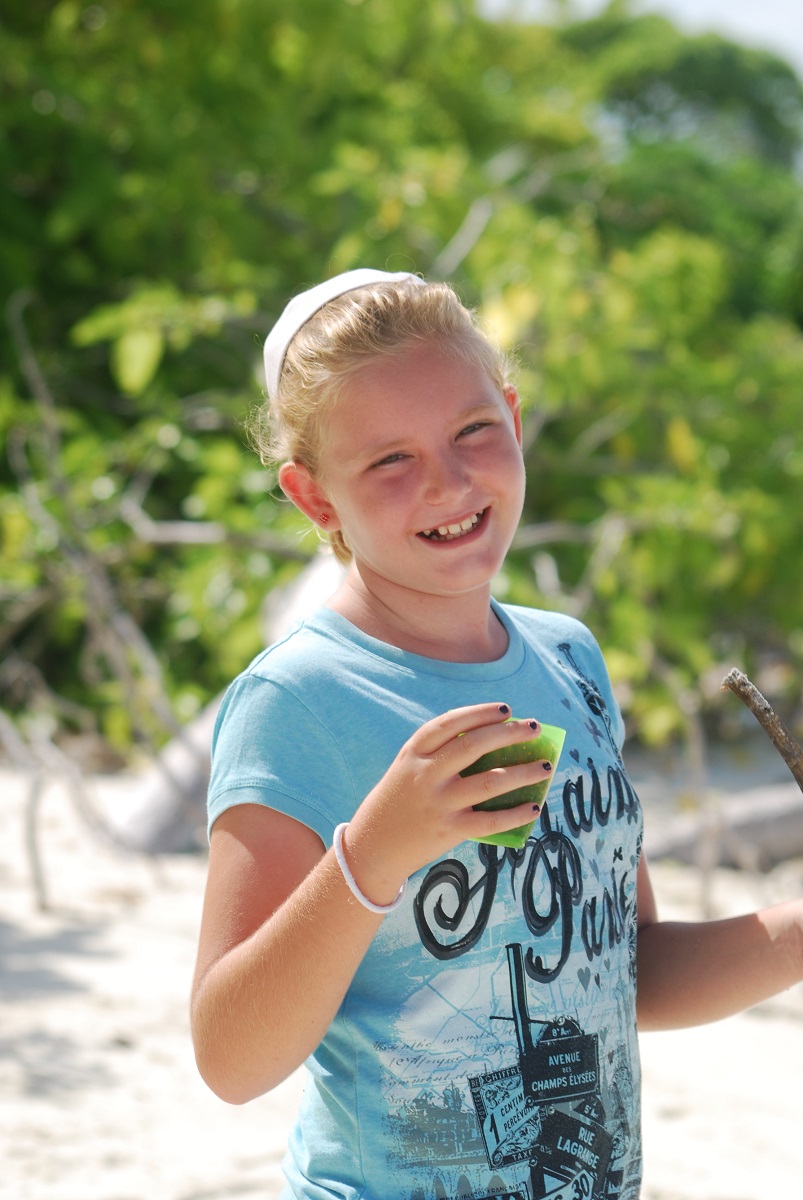
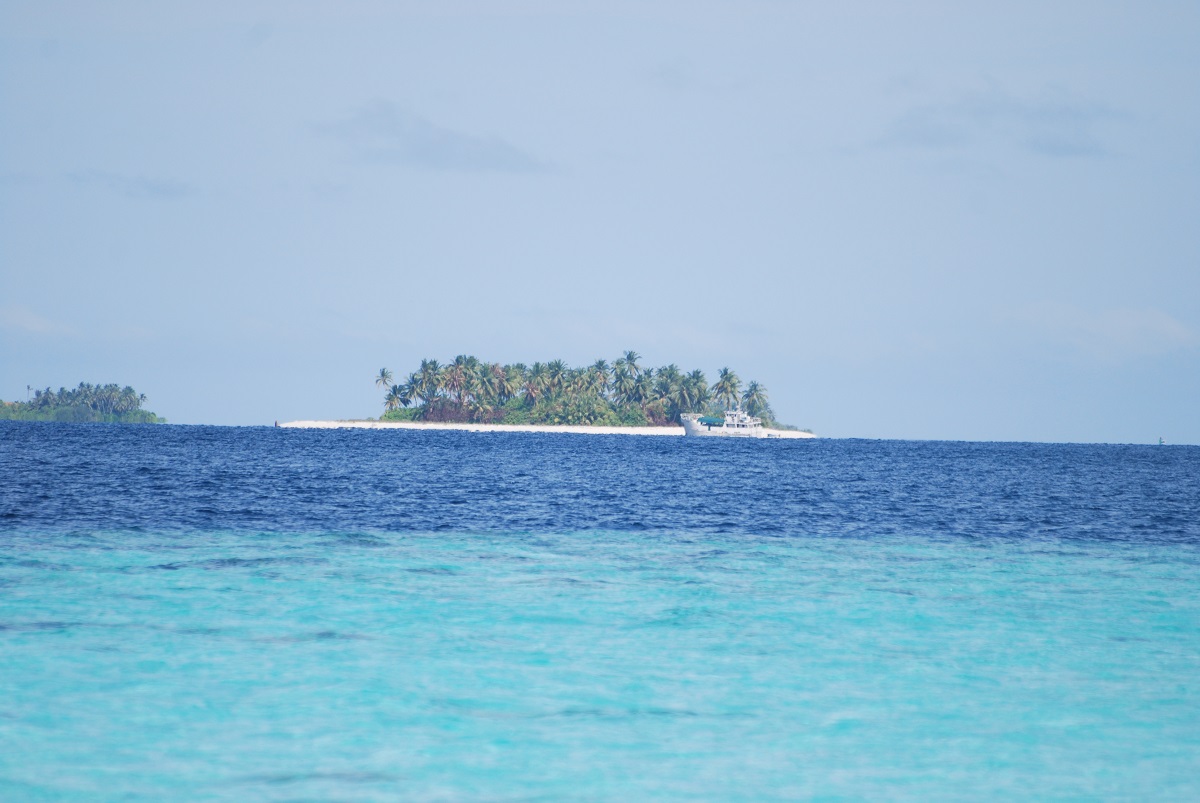
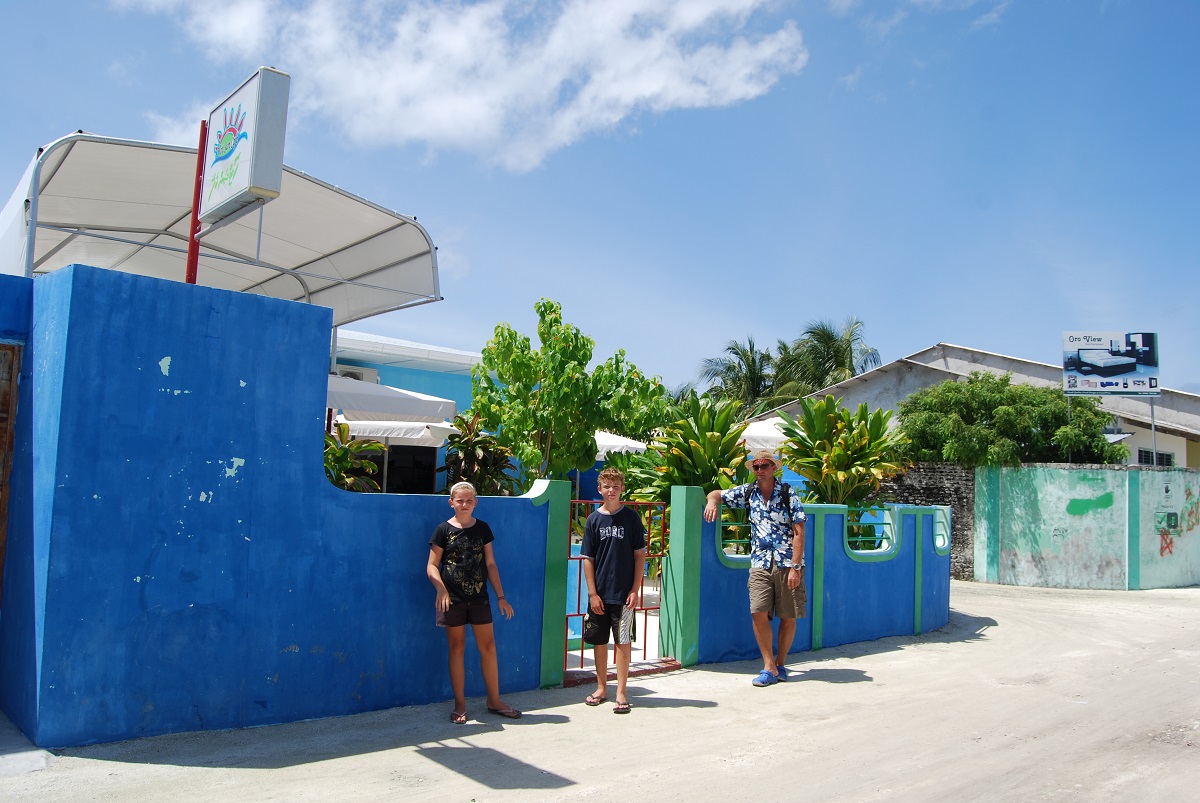
The next morning we woke early and headed onshore to see what Vilingili had to offer. We are quickly realising that each island seems to have a different character. Gan seemed warm and welcoming and seemed to take us ‘foreigners’ in their stride. In Foammulah we were treated with a little more suspicion, and though friendly enough, the locals kept their distance. Gadhdhoo seemed to have a larger older population and seemed to treat us with more suspicion and the locals kept their distance. Vilingili seems to have a larger younger population and many of these younger locals will approach us seeming keen to know where we are from etc. We are aiming to keep away from the tourist resorts which is relatively easy as they’re all clustered in tourism zones, and meeting locals is proving relatively easy.
We walked for ages trying to find a strong WiFi signal as we are both now actively job seeking from afar. We ended up in a local fisherman’s cafe, pleasant enough with a good signal and cold coke. We had only been sitting for five minutes when a fight broke between two of the waiters. It was broken up after a few minutes by an irate and very vocal older man who cracked a plastic chair over one of the guys to stop him fighting. Our waiter, a cheerful and really pleasant man, seemed to be the victim in the piece. We don’t know the reason for the fight but think we were somehow involved as heads kept being nodded in our direction and the word customer repeated several times. The police were called and seemed just to want to give the waiters a telling off – quite took me back to a Friday night out in the North East when I was a student!!
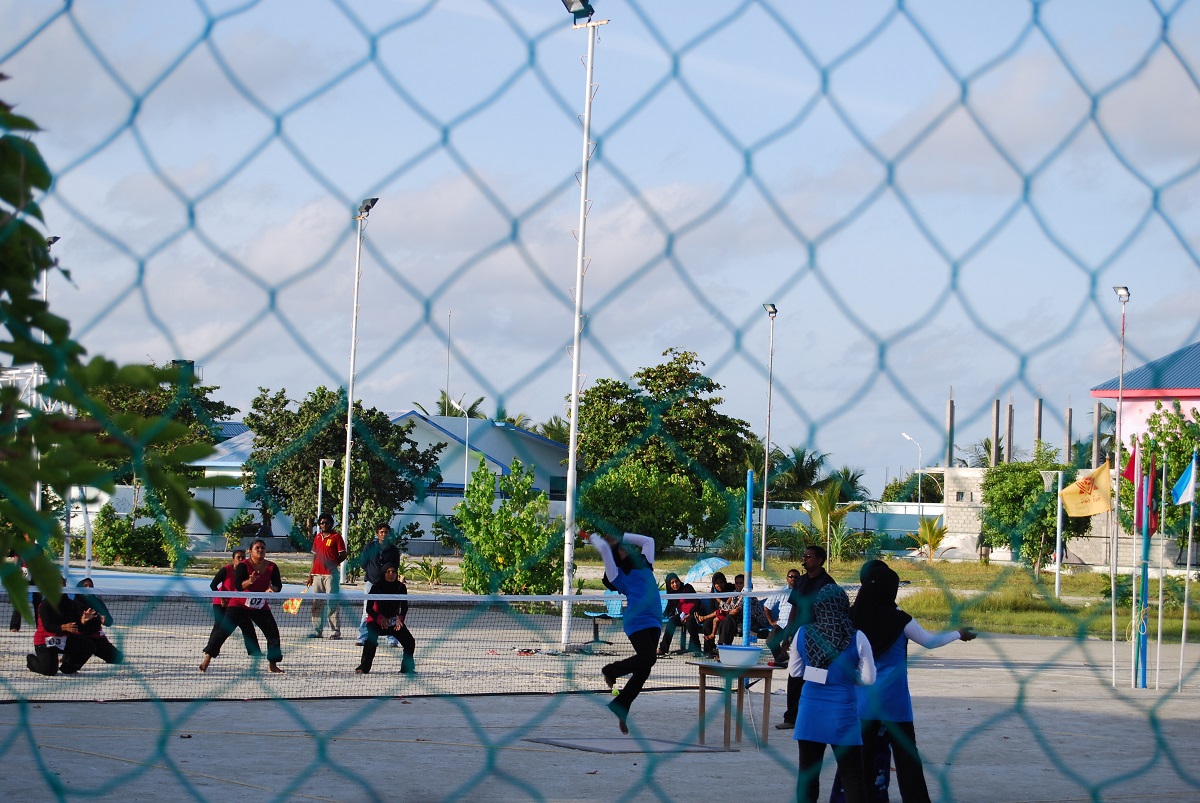
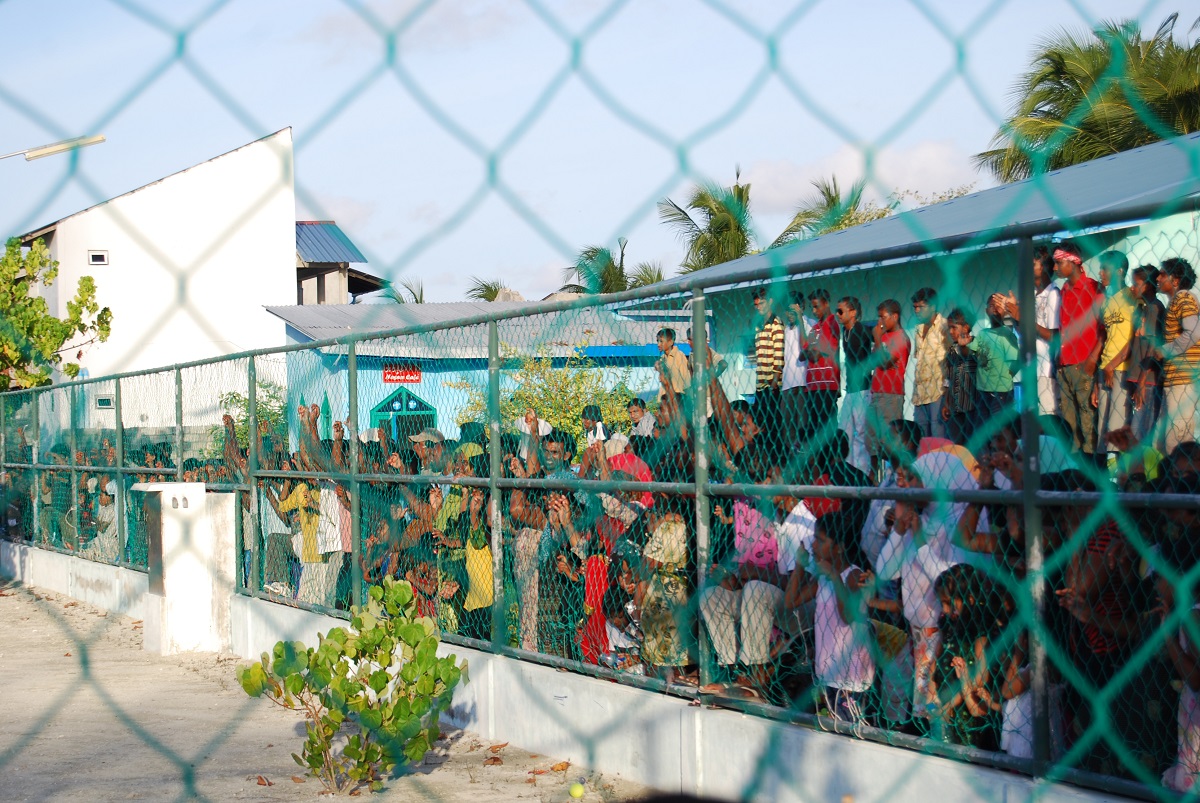
With the excitement of the fight over we headed to a small sports stadium where we were told there was a tournament to be played of a local ‘cultural sport’. Even several streets from the stadium we could hear the cheering, shouting and drum bashing of the excited crowd. The game turned out to be a mix of tennis and catch. Its local name is Bashee and consists of two teams of women either side of a tennis net. One team are fielding and the other team take it in turns to stand with their backs to the opposition and hit a tennis ball over the net. We can only assume that visitors came ashore many moons ago with one tennis racket and no instructions on how to play tennis!! We watched for twenty or so minutes and by the time we were ready to leave the players were getting very agitated and letting loose with their emotions on the referee who seemed to have made a poor line call – echos of some of the football chants I have heard about referees in UK football matches came to mind, but thought it unwise to teach to the locals!
8 Aug 2009
The neighbouring island of Kooddoo is the home of a tuna processing plant. Our friendly customs officials from our arrival at Vilingili had given us the number of the general manager of the plant and when Bryan called to see if we could pay them a visit “no problem” was the response. We packed into the dinghy and zipped the mile or so across the kandu (gap in the coral forming an entry into the atoll) to arrive in the harbour, dwarfed by the freezer factory boats. Many of the workers looked quite bemused to see westerners arriving under their own steam, but we soon located our guide and were shown inside and introduced to the GM.
Tuna is caught by line rather than nets in the Maldives, quite different from our experience in Sri Lanka with the large and cumbersome nets the fisherman use there. Tons and tons of tuna are caught, though currently there is a bit of a lull in the amount caught. The fish caught at remote islands is transferred to big refrigerated tuna boats and transported back to the tuna factories dotted through the Maldives chain. Here it is rapidly defrosted in hot brine baths and then cleaned and prepared for the huge smoking ovens. The tuna is smoked for anything up to twenty days. We sampled some of the smoked tuna and found it to be really tough and difficult to chew and an amount ended up being discreetly stowed in our pockets for later disposal without causing offence to our hosts. But apparently there is a market for this in Thailand and Japan as well as in the Maldives.
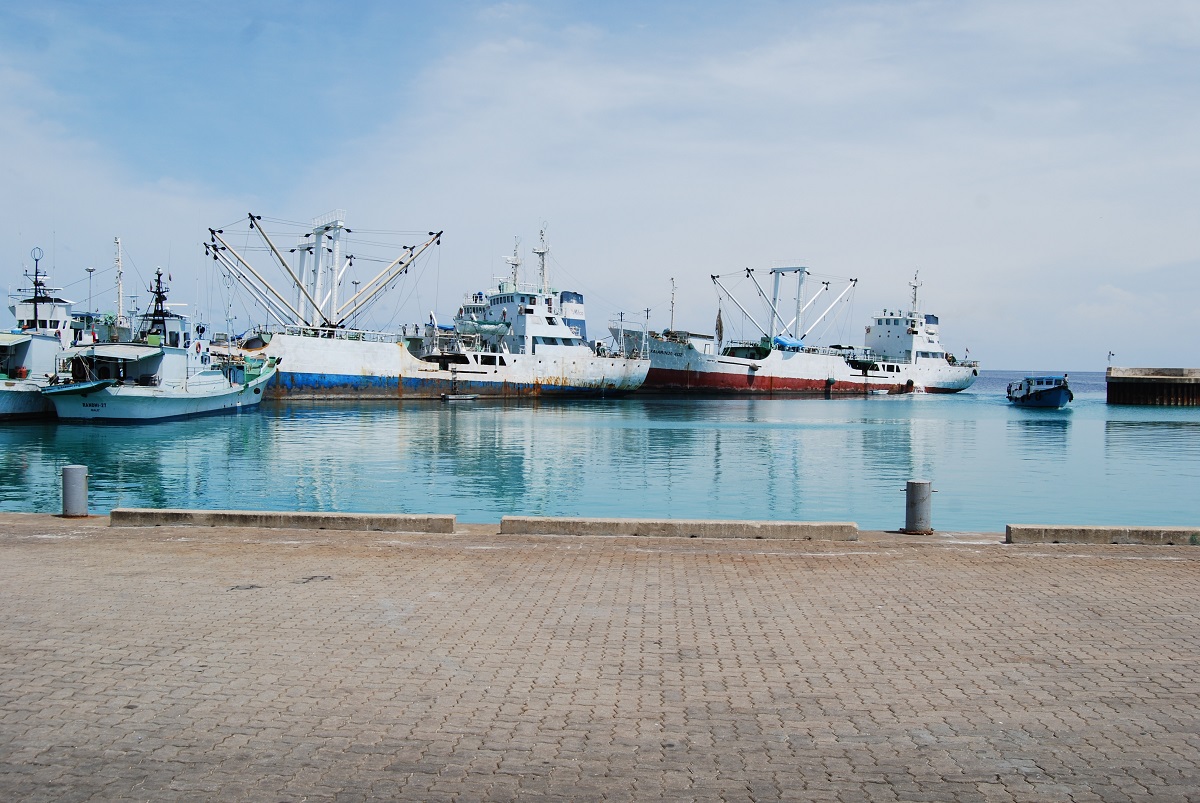
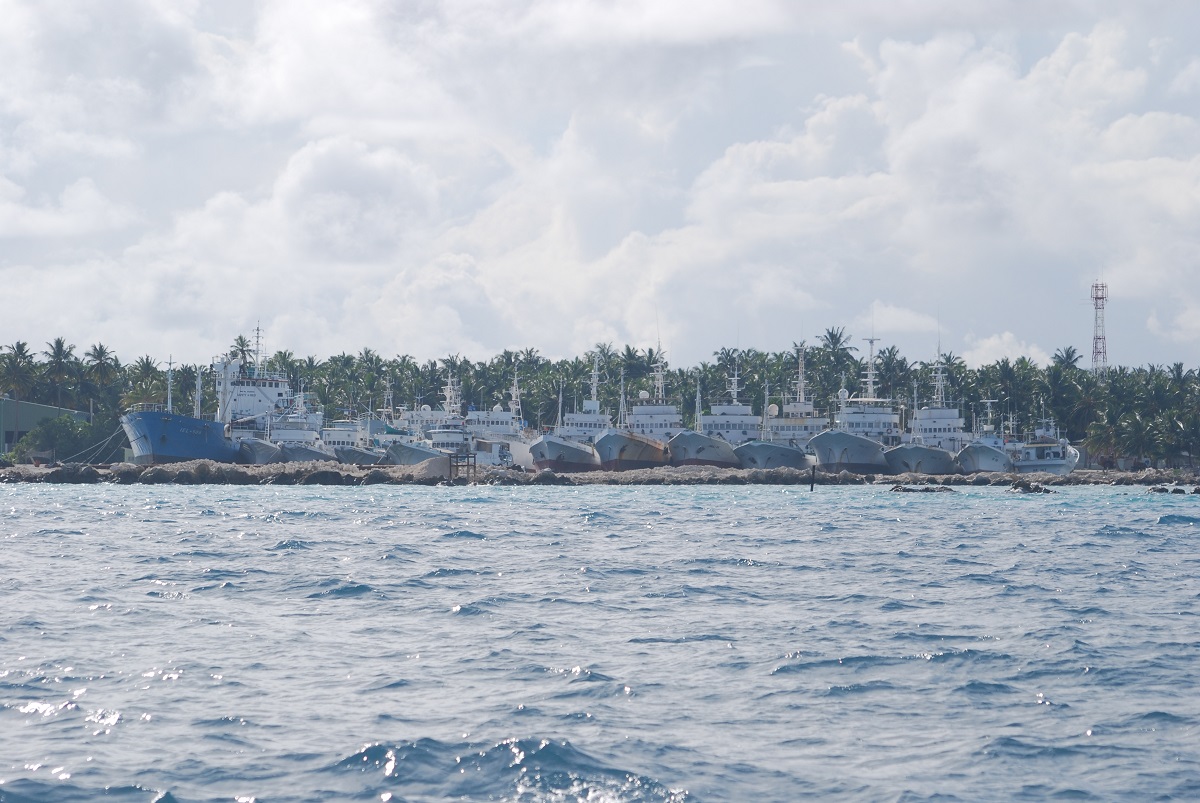
Our tour took us through the full process ending up in the factory workers shop where we bought some of the less heavily smoked tuna expecting it to be a little softer although not quite as soft as was hoped for! We were only allowed to photograph the outside of the factory so, unfortunately, no snaps from inside. It was an interesting visit and good to see some significant local employment that must be a boost for the islands nearby. It also seems a well-managed and even modern facility in many respects. We were not permitted entry into one section due to being unable to find enough white coats for us and not having the right footwear quoting it to be necessary as part of the EU regulations but still took us to the entrance where we could see most of what was happening inside.
The site employs some five hundred staff (mainly from Vilingili) and houses many of the staff in staff accommodation during the week with them returning to their homes at the weekend. The tuna island has no other local population but seemed quite self-sufficient including their own vegetable gardens for the hydroponic growth of cucumbers, chilli, cabbages and tomatoes. Our attempts to buy some were fruitless. Haha, get it?!
KOLUMAFUSHI, HUVADHOO ATOLL. 11 Aug 2009
We had planned to leave Villingili after a leisurely breakfast, expecting the thirteen mile journey to bring us to Kolumafushi just after lunch. Over the last five days we have really begun to feel the effects of the joys of sailing Maldives during the rainy season. It has rained every day and seems to be getting heavier and more persistent. At times, the rain comes in squalls and we have experienced winds gusting to 30 knots on several occasions. Other times, it comes just as rain, though heavy the seas stay flat and winds calm. Our last two days at Vilingili saw rain of the gusting type and we ended up staying a day longer than planned as we swung in full 360 degree circles in the harbour with rain pelting down. The upside though, of course, is full water tanks and plenty of hot showers. As we woke on the morning of our departure, there were still some storm clouds lurking, but nothing too menacing, but nonetheless we thought an extra coffee and a few more chapters of our books would give sufficient time for the clouds to pass over.
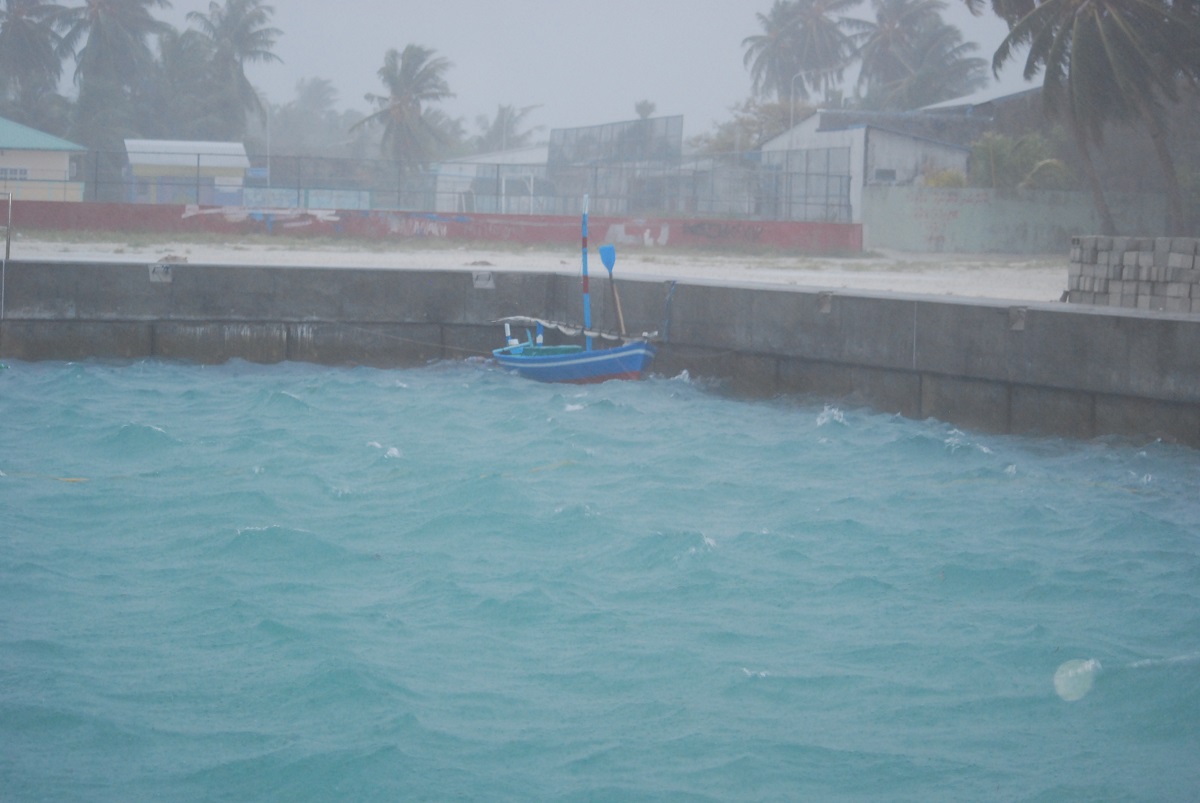
After an hour we reckoned we were good to go – only to find the 360-degree circles we had been making had dug the anchor well and truly into the clay-like sand beneath us. It took some manoeuvring to release it and it was past 10.30 am when we finally got underway. It wasn’t too long before we saw storm clouds on the horizon again directly ahead and sure enough, we were soon being buffeted by winds gusting 30 knots and the rain was coming down hard. The wind kicked up the sea too, normally calmer inside the atolls and the end result was a slow and uncomfortable passage- our three-hour trip turned slowly into a six-hour one. We arrived at Kolumafushi at nearly 4.30 pm and decided to anchor as soon as possible – and despite the fact that the chart was showing us to be above drying height we actually found ourselves in depths ranging from 10 to 17 metres. Great – we could anchor with all chain and no rope. And anchor we did, only to find that the spot we had selected had a choppy current passing at right angles to the wind making the boat roll from side to side in an unpleasant way. We had no choice but to stay put as night fell and we wobbled and rolled like a belly dancers stomach.
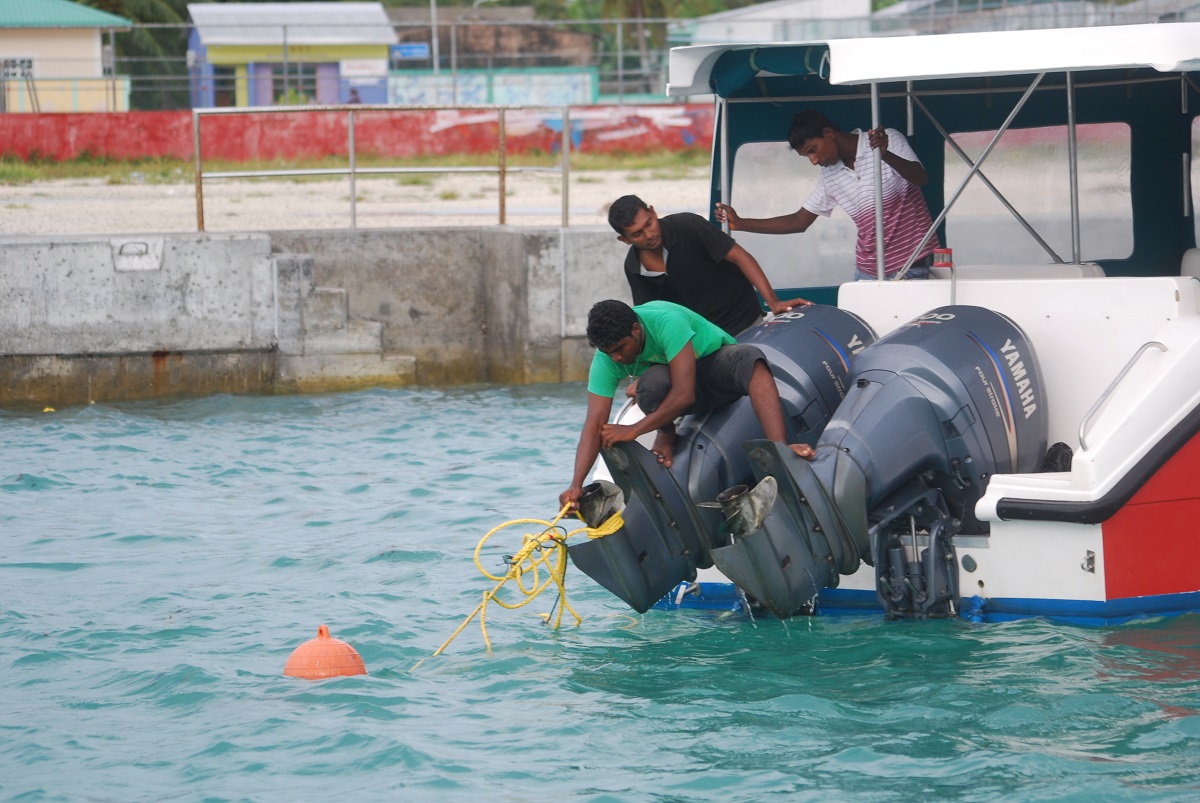
What a night!! Not fun – the motion was soon accompanied by those 30-knot winds again and the rain absolutely poured down. At first sun up Bryan and I were in the dinghy heading to the nearby harbour that we had seen the night before to check its suitability as a new anchorage – enough was enough. The locals were welcoming enough and we soon agreed on a spot we could moor stern-to to the harbour wall. The locals even offered to move some offending ropes to ease our route in. Back to Aroha, and of course another rain shower! Eventually, we headed into the harbour, soaked to the skin and looking like harbour rats. We had quite a crowd gathered on the harbour wall. Many were genuinely there to help, including one guy in the water with his snorkel and mask on to make sure we didn’t snag on any ropes – he literally stood on ropes in the water as we passed to ease them under the keel. The majority were there to enjoy the spectacle – maybe a crowd of 30 or so – nothing like an audience to put the pressure on! Thankfully we made a reasonable job of getting in the harbour, doing a three-point turn and were soon anchored and tied on. Finally, Aroha stopped pitching and rolling! After thanking our helper s- we got down to the important business of the day – a shower, a hot cup of coffee and some breakfast!
Follow and like us to be notified of future blogs!
www.facebook.com/ripeningnicely


