Solo Sailing
With Helen flying home from Phuket, left me about a month to sail Aroha back to “our” marina in Langkawi, south, just across the border in Malaysia. I much prefer it when Helen’s on board – we make a good team. We’re pretty good at going through options and then agreeing on the one that best meets our needs, always putting safety and comfort first.
We’re pretty cautious sailors. For example, when we’re sailing and if one of has to leave the cockpit to go forward on deck or below for a wee break, we’ll call the other to keep an eye on us and Aroha until we’re back in the safety of the cockpit. When I’m by myself, I apply a similar level of caution – I always wear my lifejacket when I leave the cockpit, even when anchoring. I like to think that Helen would come back for me if I fell overboard, but I shudder to think of an unmanned boat sailing towards the sunset, if its captain should fall overboard.
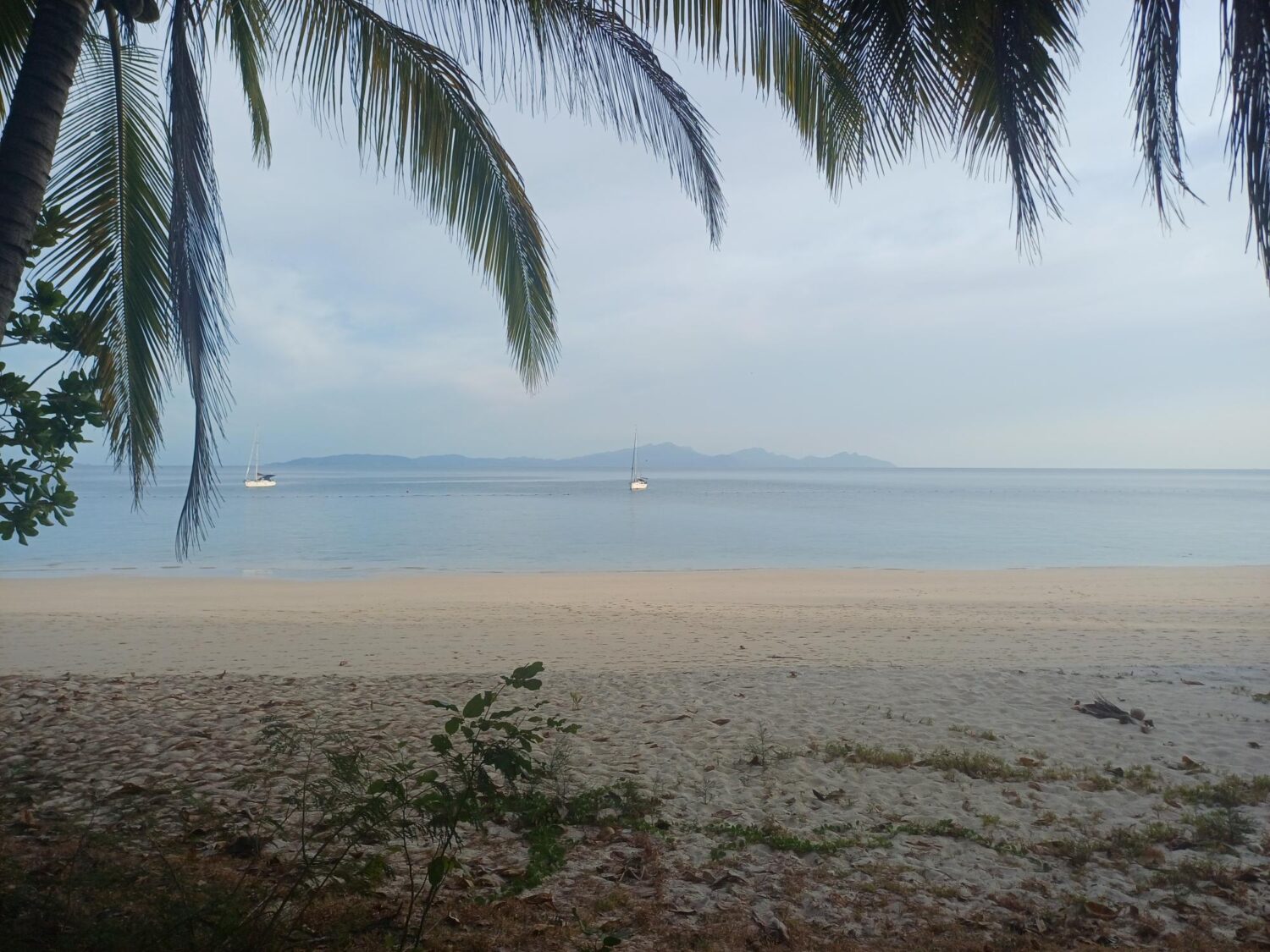
The auto pilot can set a course relative to the compass or wind direction. It’s like having an extra crew on board – allowing me to move around to adjust the sails, make a sandwich or whatever else needs doing. But “Ray” (our Raymarine autopilot) doesn’t hold a great conversation. When I’m sailing solo, I make up for this by talking to myself – playing the roles of both myself and Helen.
When we’re anchoring or picking up a mooring buoy, the one of us driving (usually me) and the one at the pointy end of the boat (usually Helen) are in constant communication:
Driver: “Standby for six meters depth”.
Pointy end; “Standing by”.
“Stopped. Lower anchor, six meters”.
“Lowering…. ten… twenty… thirty meters. Snubber on”.
“Reversing….. holding. Happy with that?”.
“All good”.
Something like that.
I wonder if other people in the anchorage wonder if the guy walking between the helm and the pointy end, talking to himself, is totally okay.
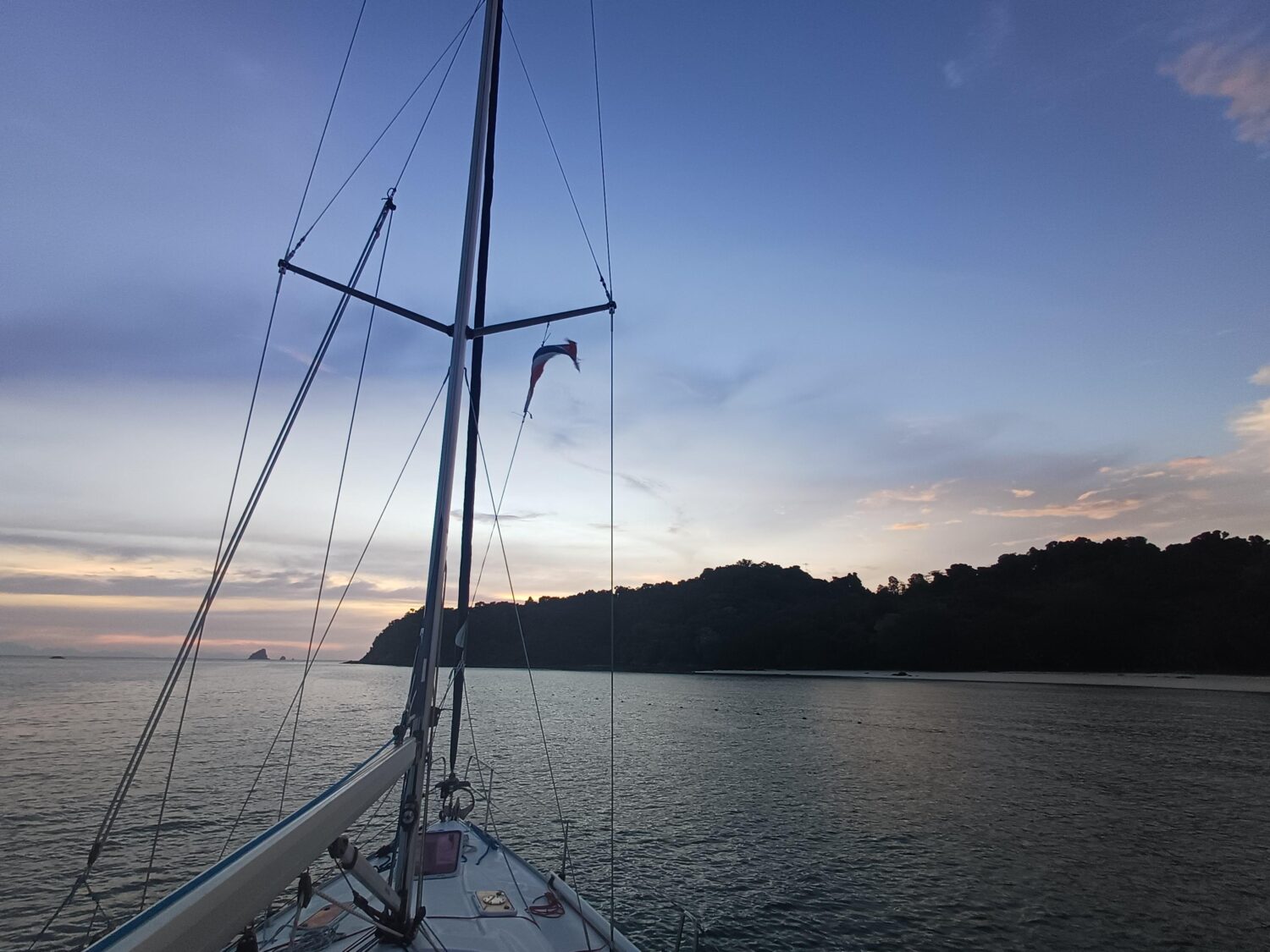
Although Phuket is only about 140 nautical miles (250 km) from the Malaysian border, it’s a super convenient place to clear in and out of Thailand. The harbour master, immigration and customs offices are all next to each other on the main pier. You simply anchor, park your dinghy on the pier, walk up the steps and within an hour you (and your boat) are officially in or out of Thailand!
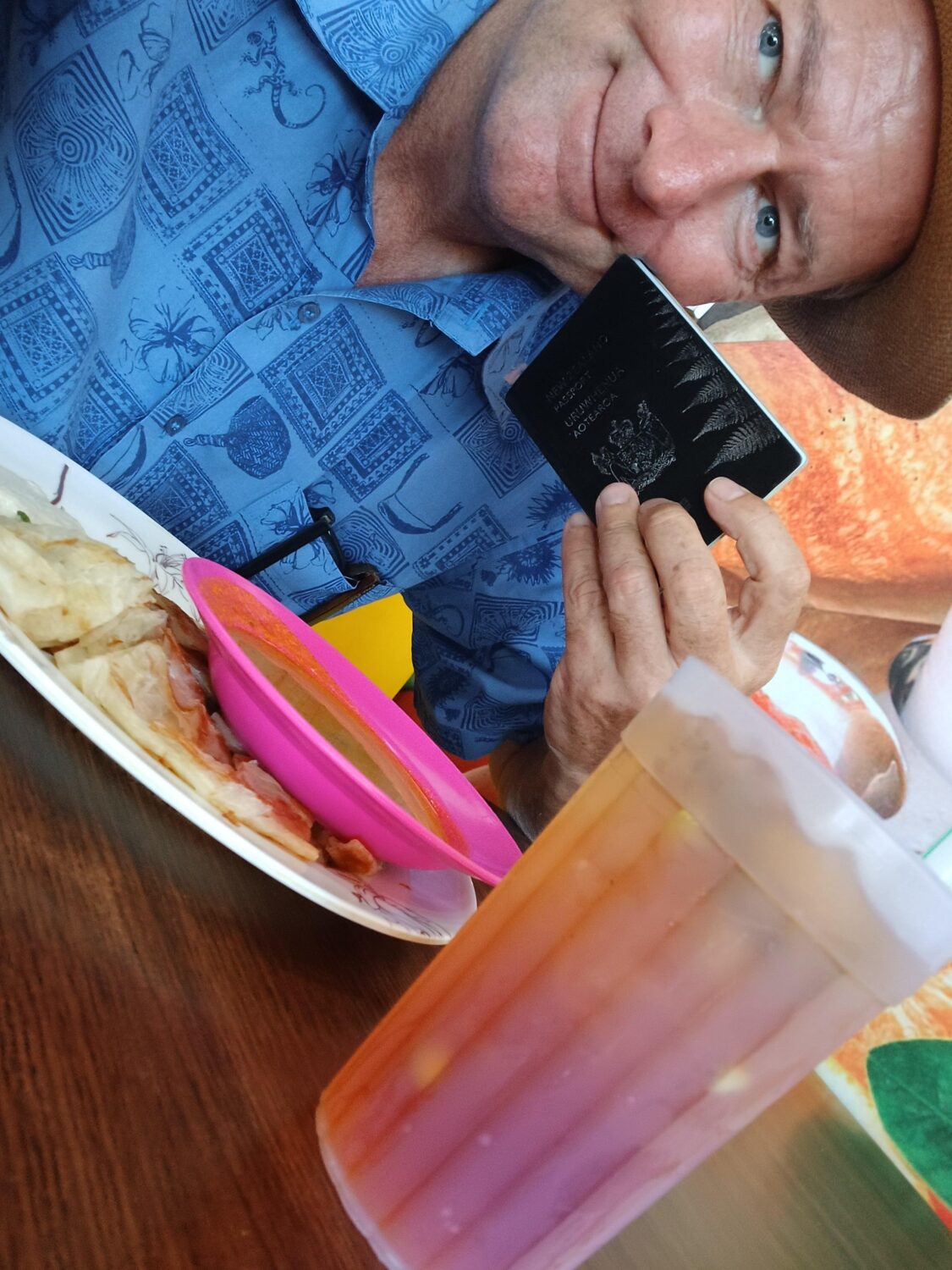
The system in Langkawi is similar, with the offices all located in the tourist ferry terminal. It’s one of the smoothest clearing places we’ve ever been to – you can collect all your stamps and paper and get to the conveniently placed roti paratha place within an hour!
All up, it’s not dissimilar to the process that you go through when you go through an airport – you complete certain paperwork and make declarations, collect stamps and promise to follow the rules. The whole clearing in and out in this easy way is kinda fun, and there’s something special about crossing an international border under your own steam.
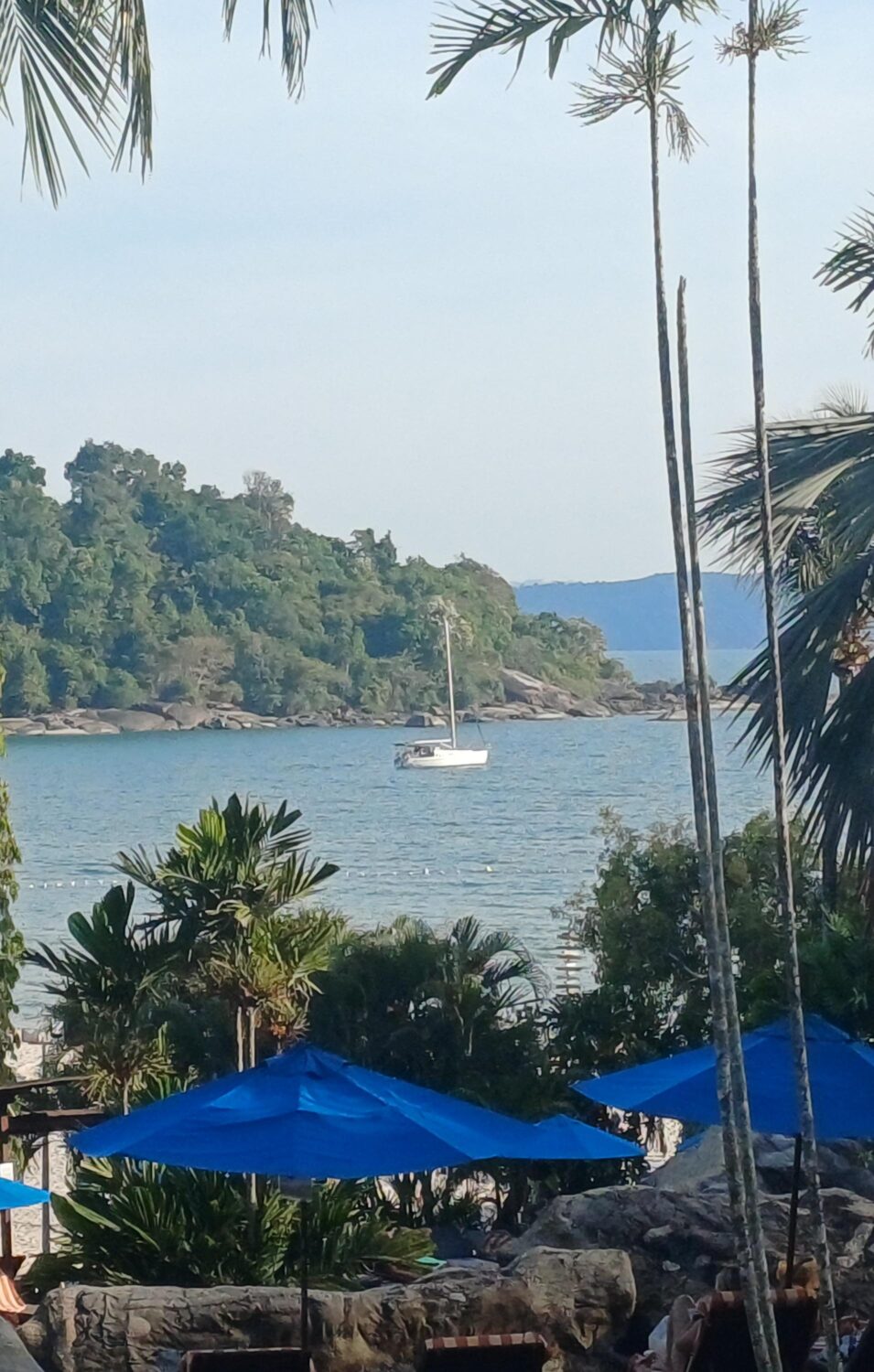
We could make this trip in an overnight passage, but with the authorities being used to slow-moving sailing boats (their sailors normally move quite slowly too…), they allow up to two weeks. It takes a huge pressure off – you can island hop between the islands quite relaxed, and most importantly, safely. This was all the more important for me, sailing solo.
To avoid a stop at crazy-busy Koh Phi Phi, I chose a good weather window for the first sail to get past Koh Phi Phi and on to Koh Lanta. At 46 nautical miles, the first day was an eleven-hour marathon. Even on a gentle-motion beam reach, I arrived exhausted, dropping the anchor in a familiar bay at the south – we’ve been here several times before, so I knew that if the passage took longer than expected I could anchor in the dark if need be. The cold Singa beer in the cockpit, as the sun set, never tasted so good.
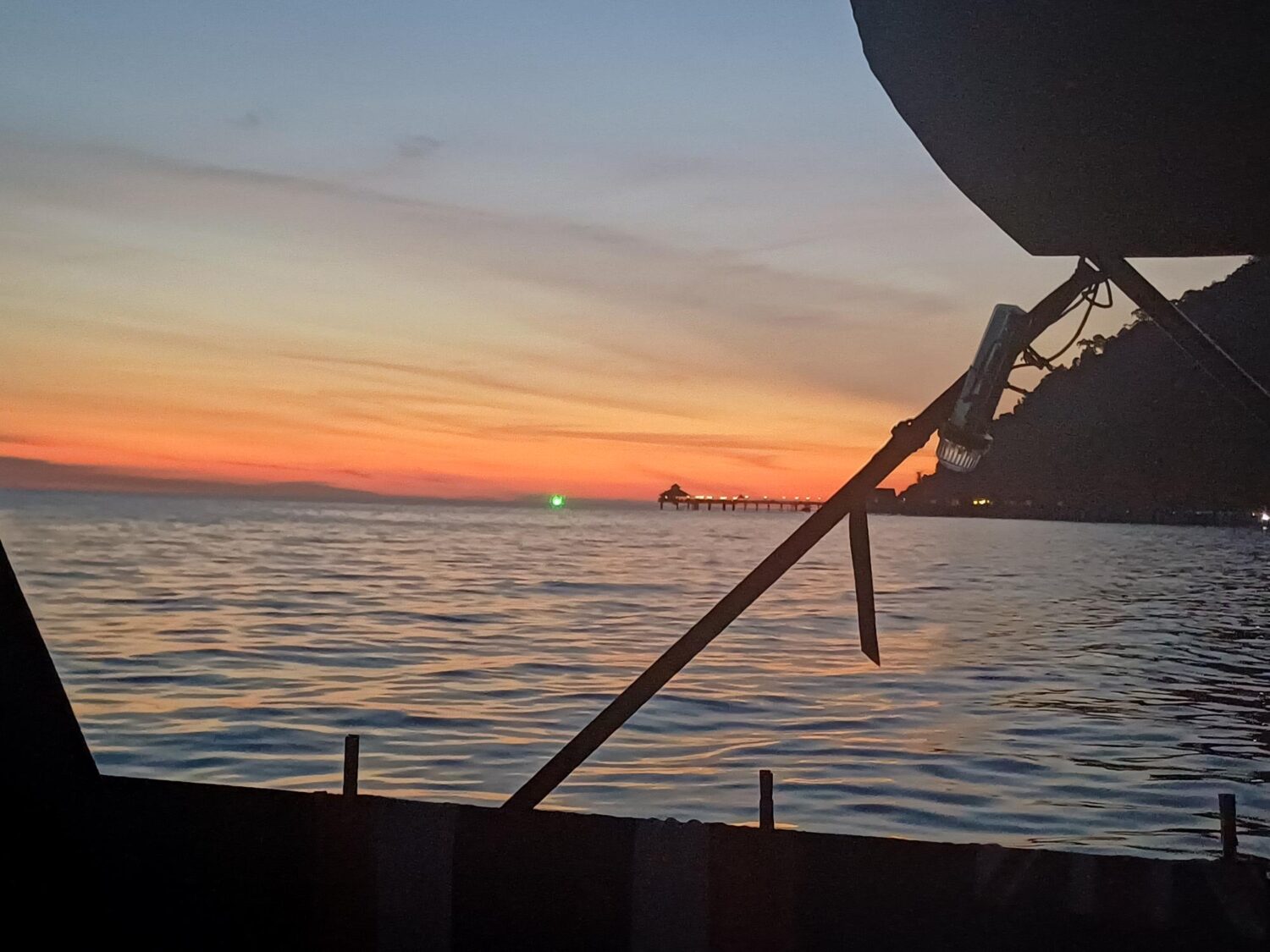
From there on, it was pretty much island hopping down the coast – my kind of sailing. We’ve spent a cumulative couple of months on this little stretch of coast and feel like we know it quite well. There’s something satisfying about marking anchorages on our digital chart, and accumulating memories on top of earlier memories.
The exception to this easy sailing was coming out of Mu Koh Rok (see previous blog; Thus Far! – Ripening Nicely) The wind was “on the nose” and sailing close hauled (sailing close to the direction the wind is coming from) results in a tight, bouncy motion. We always have a “plan B” bail-out destination and if Helen had been on board, I’m sure we would have had a conversation earlier in the day about altering course to a shorter and more comfortable passage.
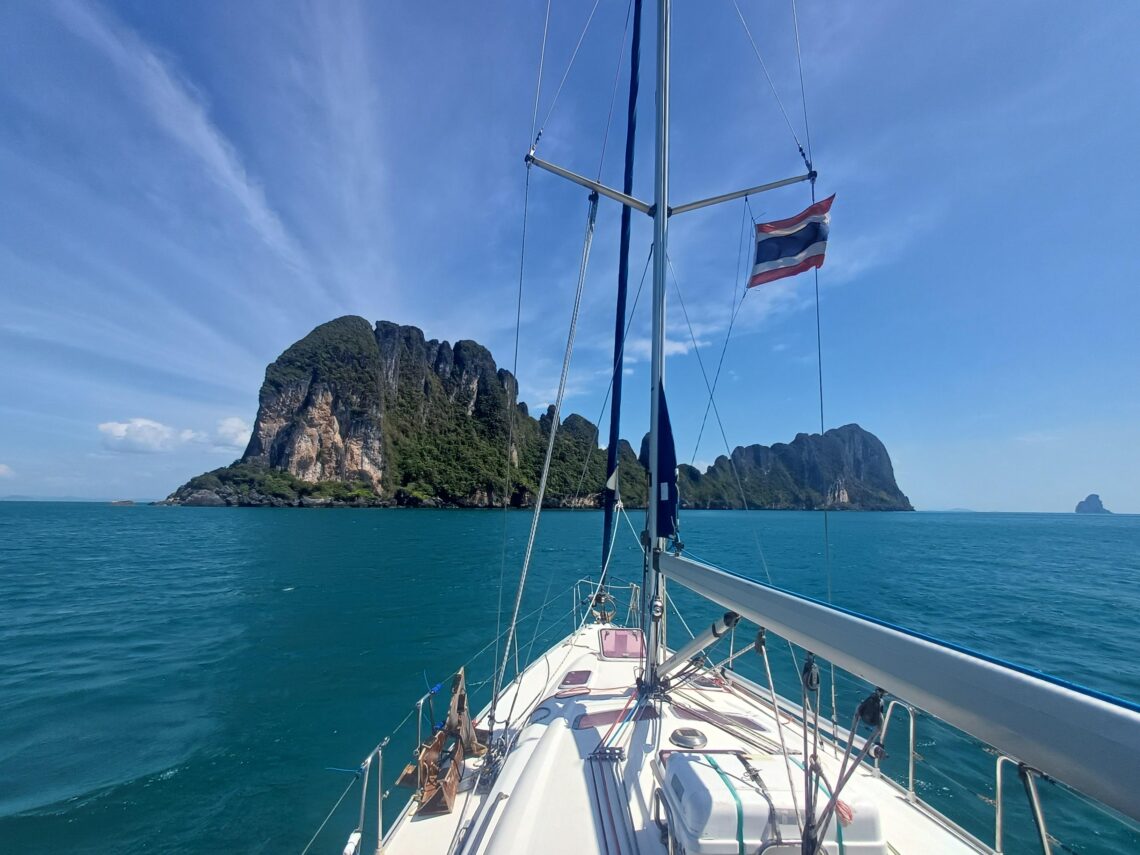
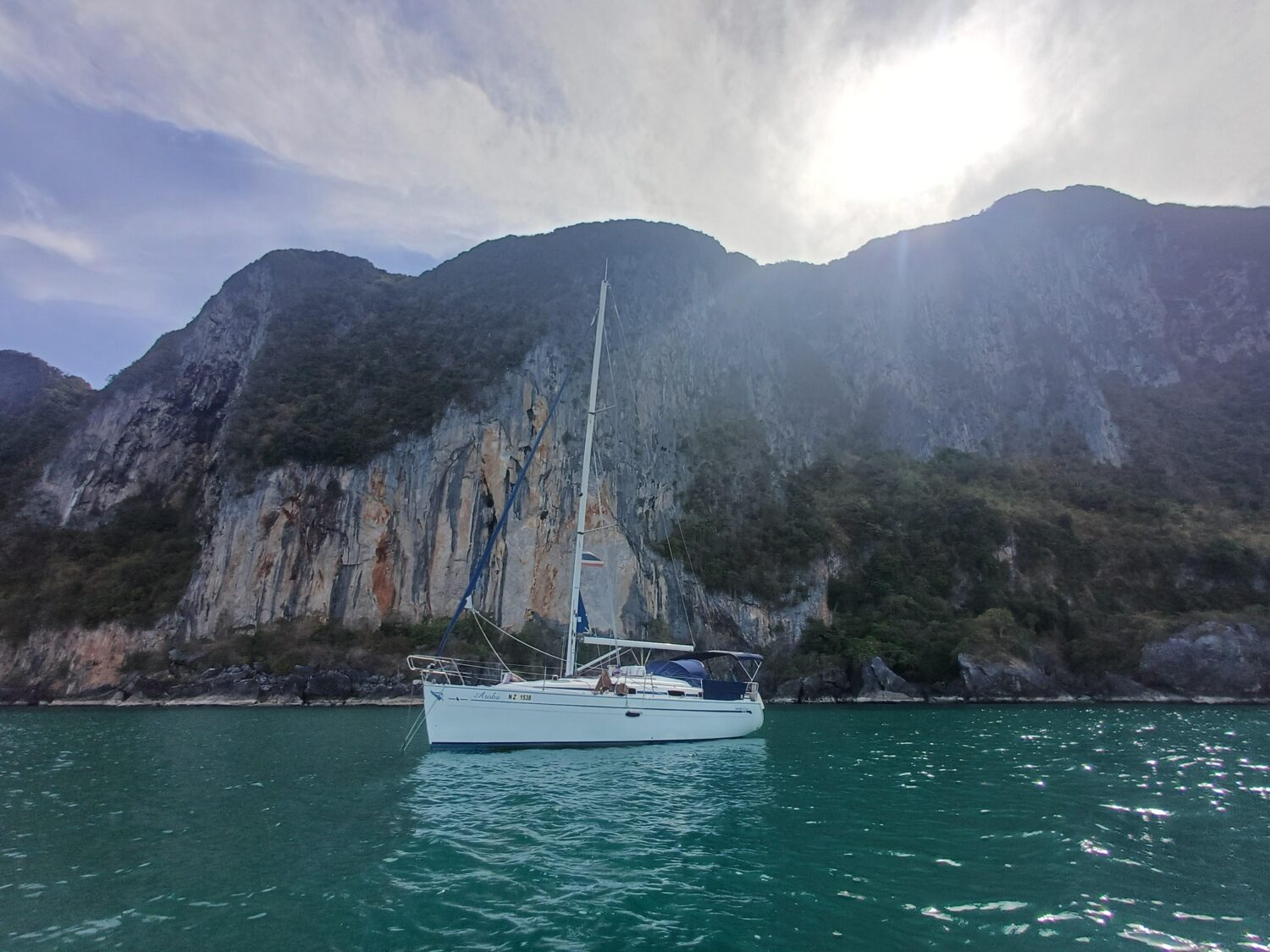
There’re a couple of islands on this route (Koh Phetra and Koh Liang) that are dramatic slabs of granite sticking out of the ocean that make for dramatic anchorages. It’s difficult to capture on camera, but imagine being able to anchor close enough to towering cliffs, that you’re still in shade at ten-thirty in the morning!
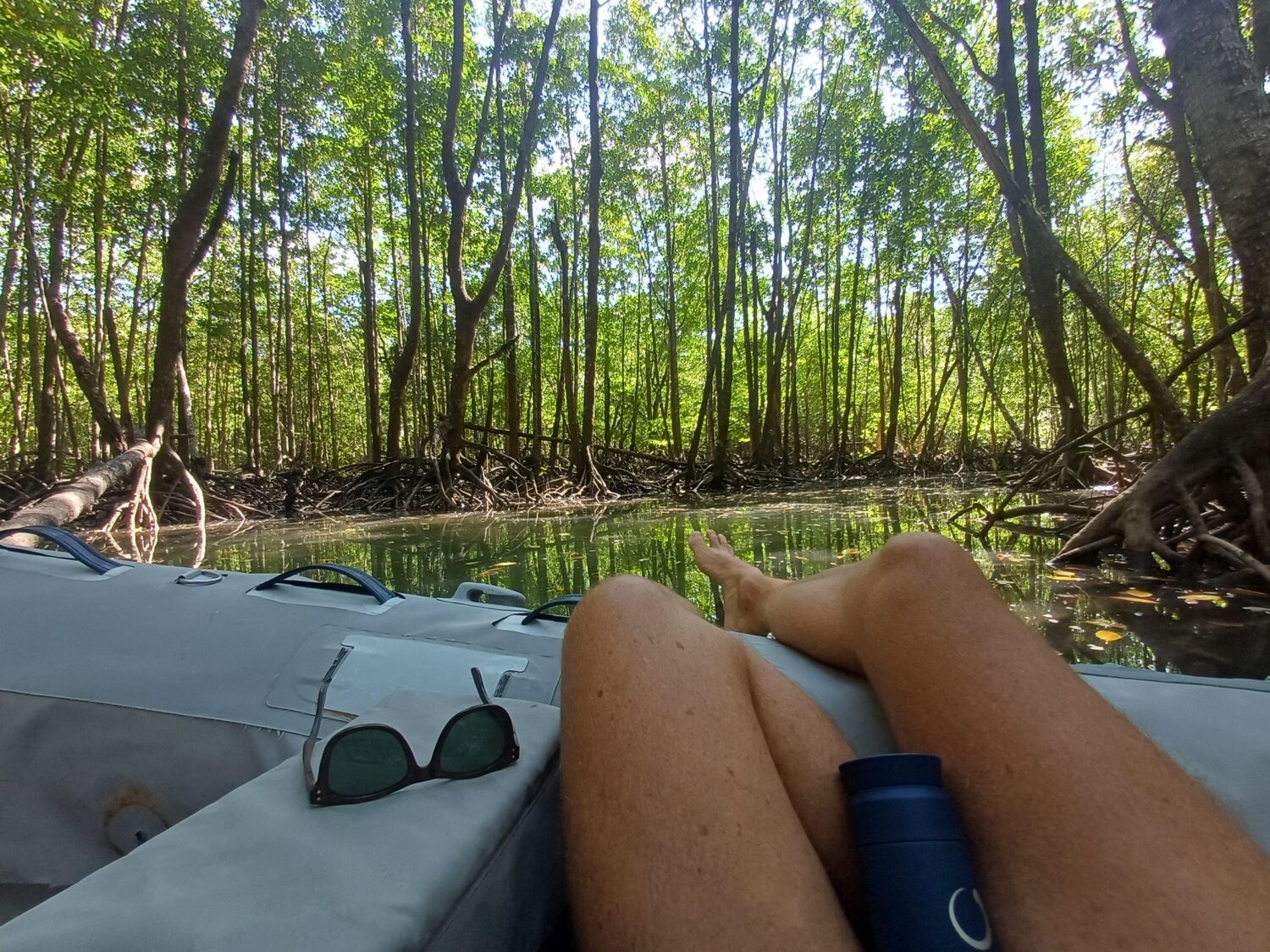
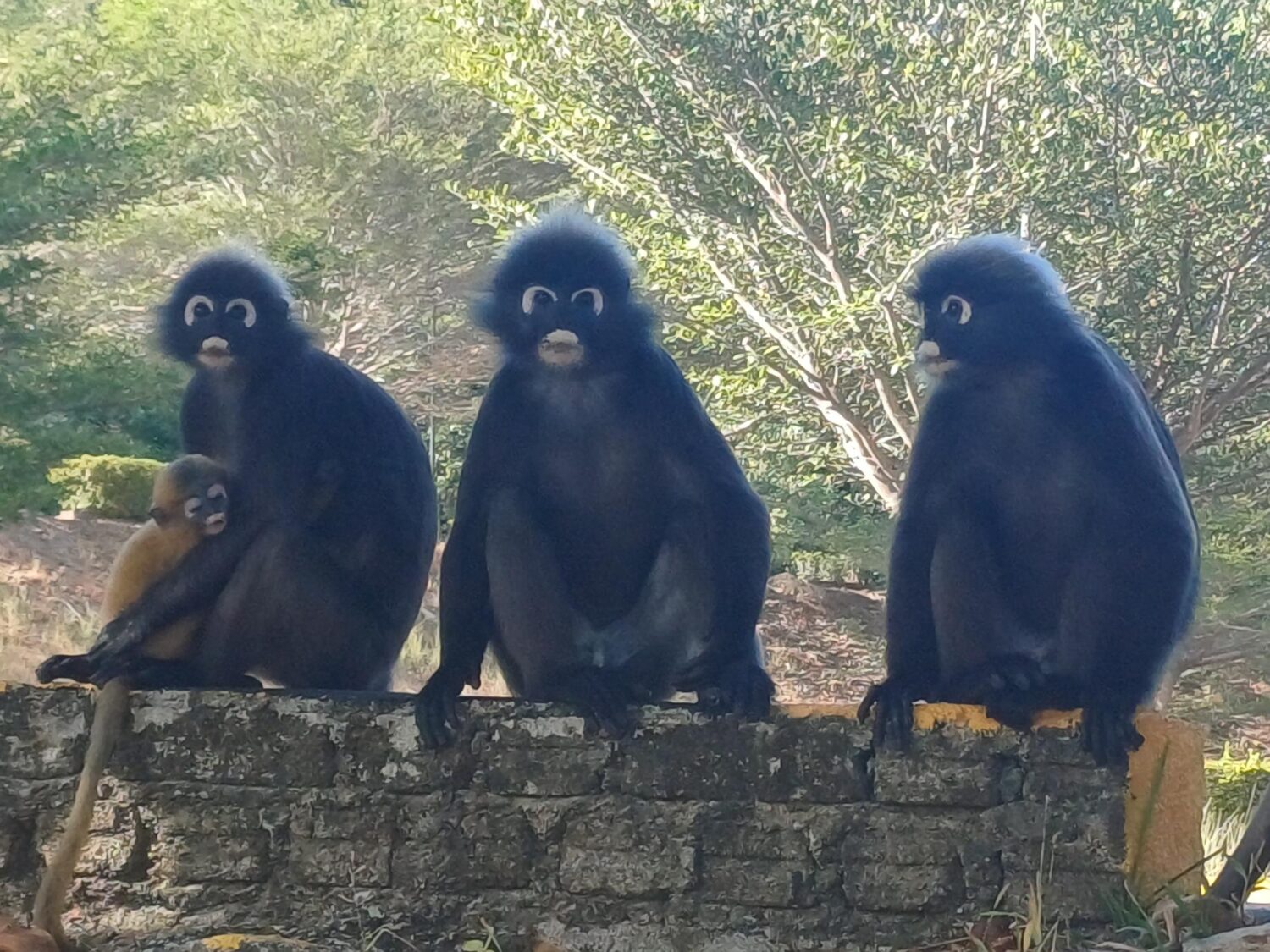
As pretty as clear water and white sandy beaches are, I also love getting into the mangroves. There’s so much life in there, George (our dinghy) and I will often find a place to sit in the shade, iced coffee flask in hand and wait for the wildlife to come out. George (and his 15hp high pitched two stroke outboard) “don’t do subtle”, so it takes a while for the calm to return to the mangroves and the rays, monkeys, snakes and (ever elusive) otters to show their faces.
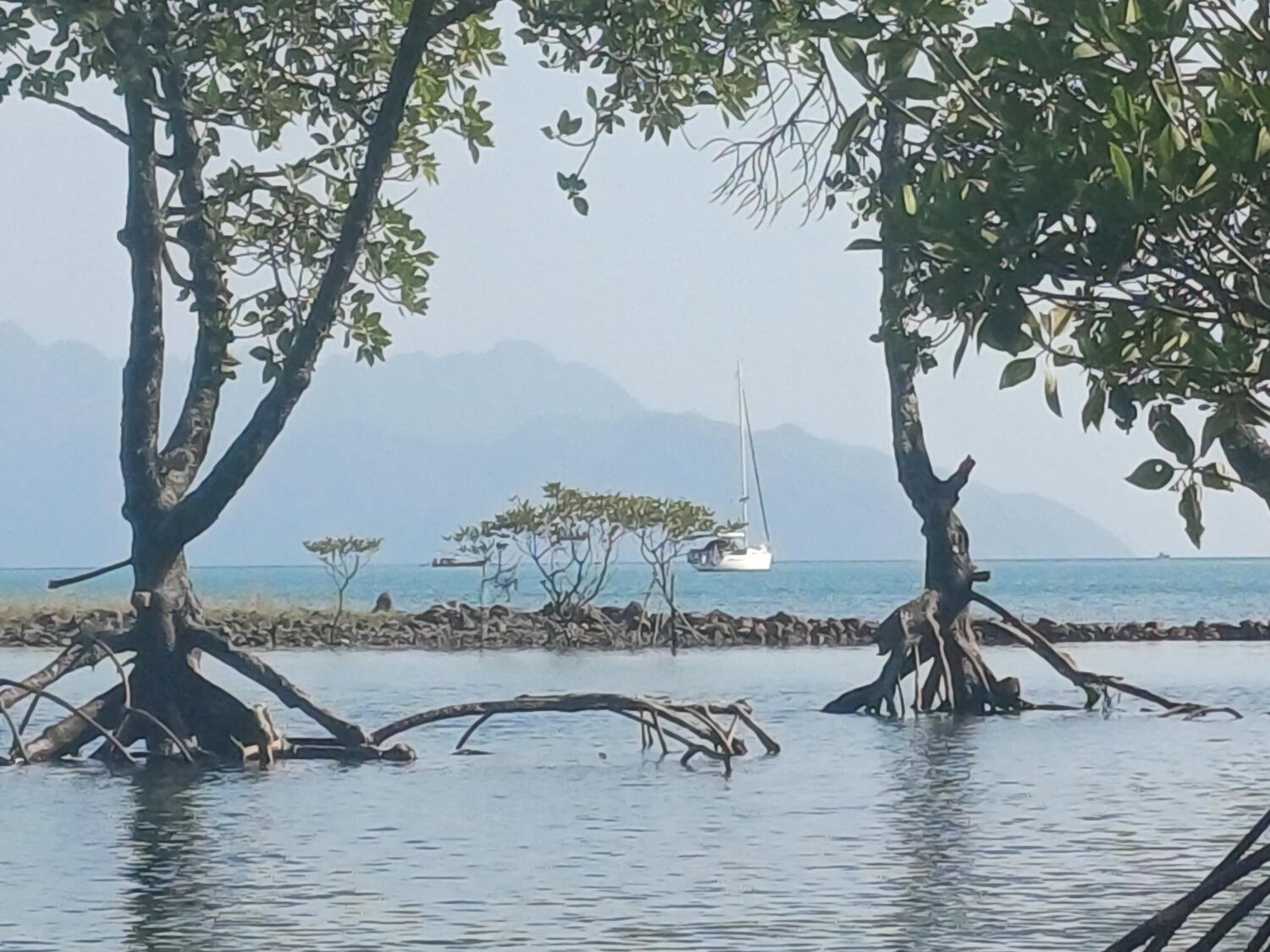
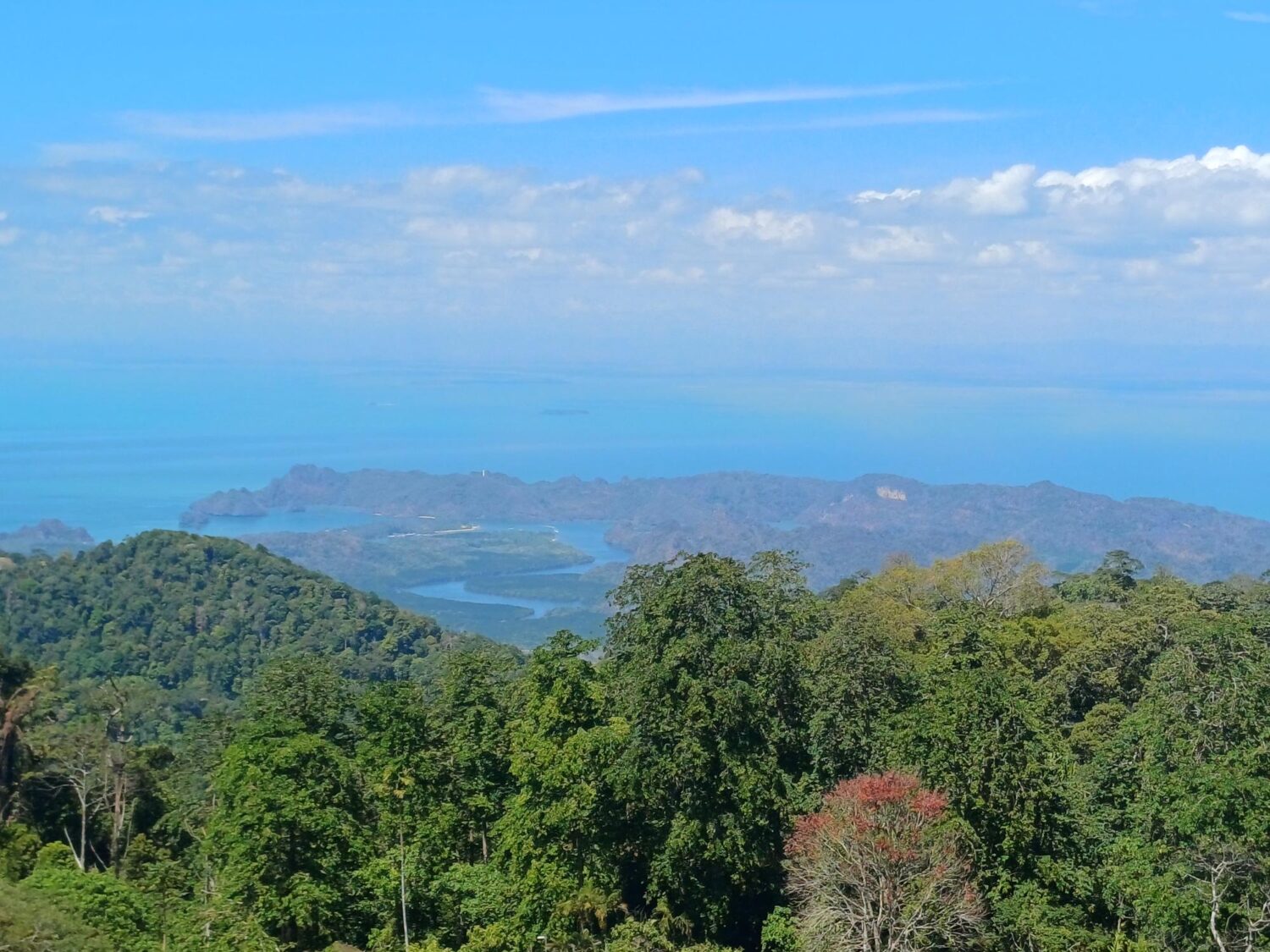
I enjoyed returning to a couple more of our old stomping grounds – Koh Bulone, Koh Taratao, and then across the watery Thai-Malaysia border back to Langkawi.
I’m not too fond of the putting-Aroha-to-bed jobs – they lack the reward that follows the jobs at the beginning of the season. So, I treated myself to a few easy paced days in the marina, interspacing jobs with relaxing at the adjacent resort pool and restaurants.
After a Dubai stop to catch up with friends and colleagues, we’re settled back in Devon now, ready for our “other life” for the summer, before returning again to SY Aroha towards the end of the year.
Follow and like us to be notified of future blogs!
www.facebook.com/ripeningnicely